White Label Survey Software

White-label survey software for agencies and resellers. Rebrand NPS, CSAT, employee engagement, and feedback collection tools under your own brand.

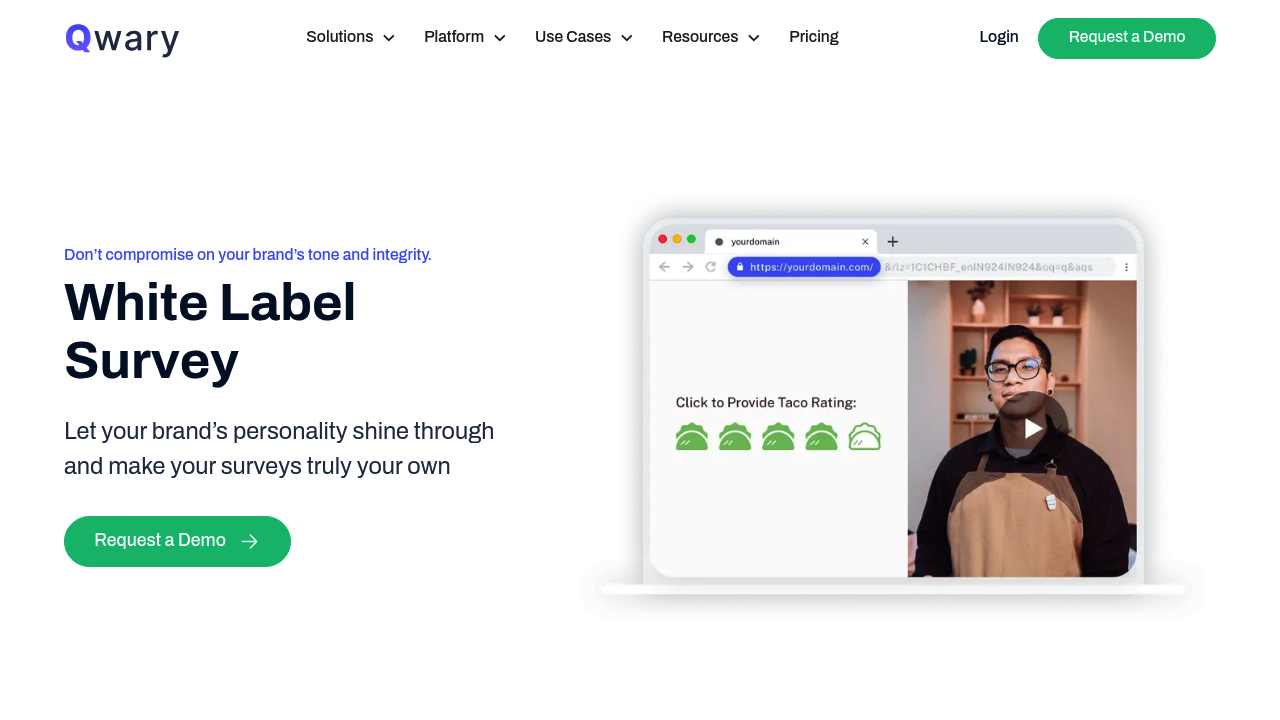
Visit website Desktop screenshot of Qwary web interface

Qwary is a CX survey and feedback platform with removable branding, custom CSS, support-assisted CNAME domains, custom SMTP for email surveys and a public REST API.

Survey Software
Branded Business Fit Enhanced White-Label🔋
56 DR
Vote for this project
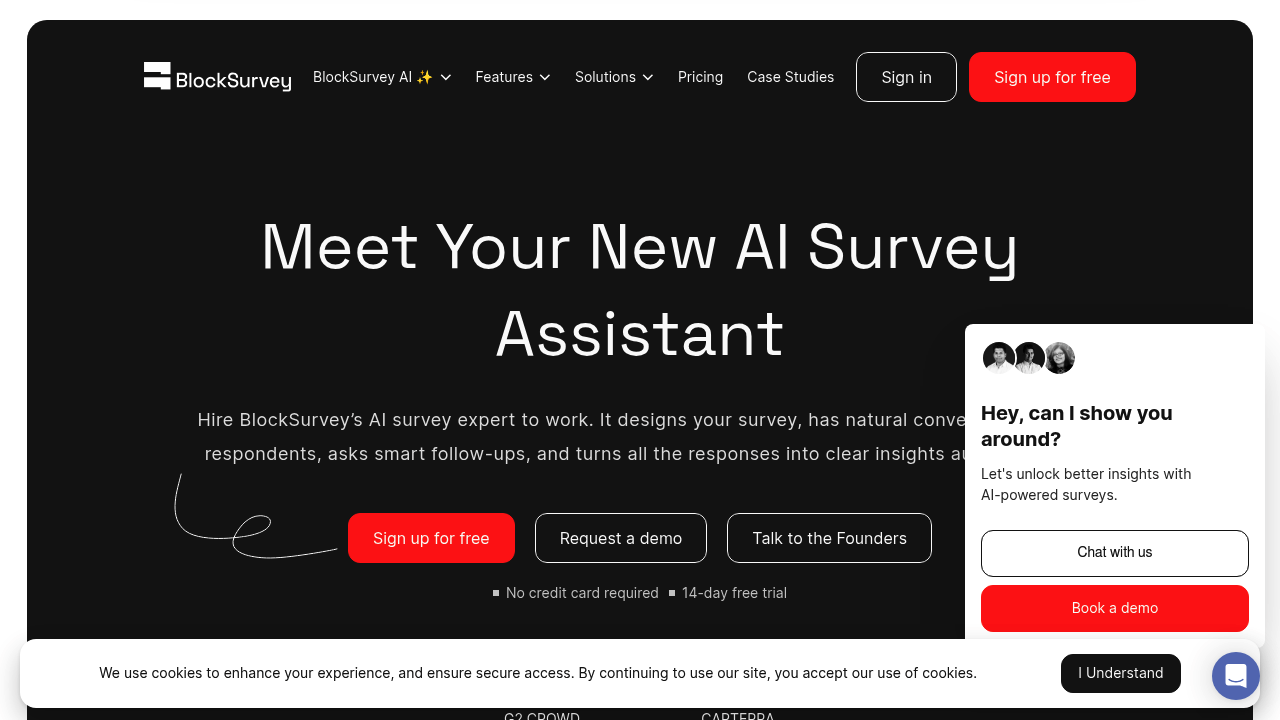
Visit website Desktop screenshot of BlockSurvey web interface

BlockSurvey is a privacy-focused encrypted survey platform with Brand Kit white-label controls, removable branding, CNAME custom domains and a custom transactional email provider.

Survey Software
Branded Business Fit Enhanced White-Label🔋
73 DR
Vote for this project
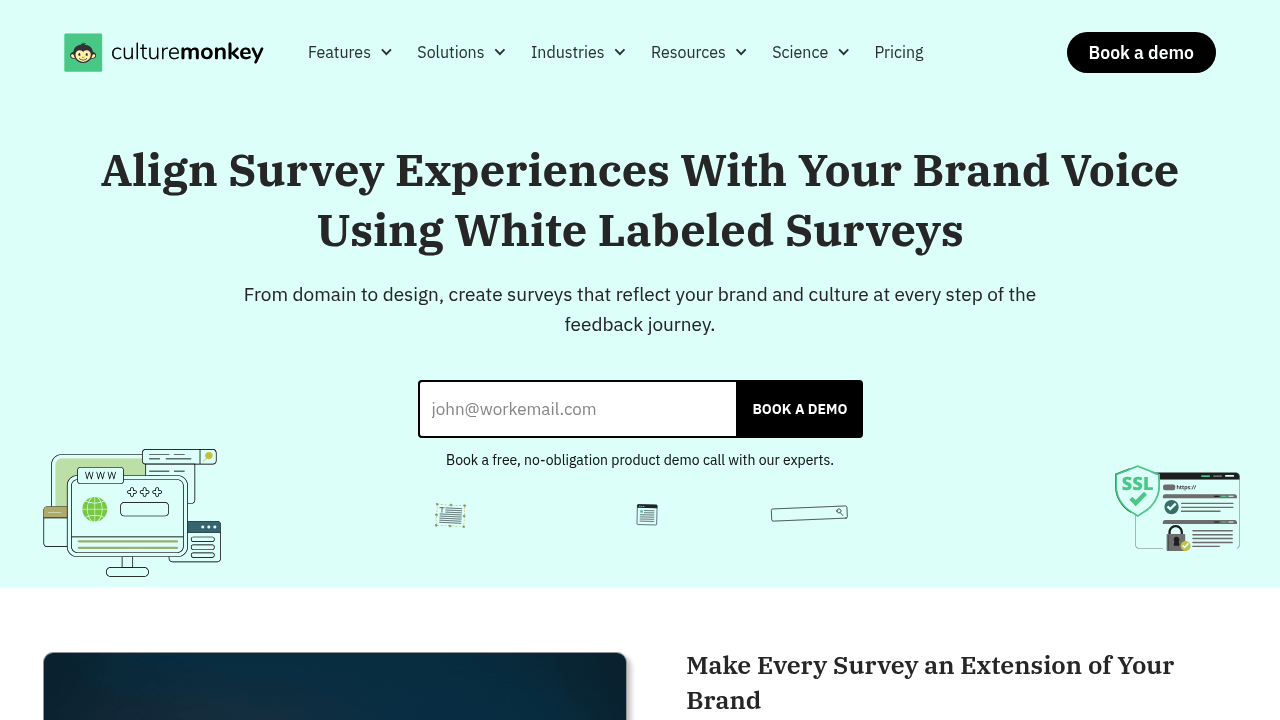
Visit website Desktop screenshot of CultureMonkey web interface

CultureMonkey is an employee engagement survey platform with custom survey domains, custom SMTP emails, and organization, Business Group and per-survey logos.

Survey Software
Agency Fit Branded Business Fit Enhanced White-Label🔋
72 DR
Vote for this project
Click here for Survey Software FAQs

White Label Survey Software FAQs

Welcome to our comprehensive guide on White Label Survey Software. In this article, we address the most frequently asked questions about white-label survey platforms, helping you understand, evaluate, and leverage these tools effectively. Whether you are a marketing agency, HR consultancy, CX specialist, EdTech provider, or independent researcher, this FAQ resource will clarify how white-label survey solutions can strengthen your feedback programmes and elevate your brand.

White-label survey software is an online survey platform built by a third party but fully rebranded with your own logo, colours, domain, and email identity so respondents interact only with your brand, never the vendor's. From survey invitations to the results dashboard and final reports, every touchpoint carries your identity. The vendor manages the infrastructure, security, and platform updates behind the scenes while you focus on designing, distributing, and analysing surveys under your own name.

White-label survey tools are ideal for marketing agencies, HR consultancies, CX and EX specialists, market research firms, event companies, EdTech platforms, non-profits, and any professional services business that runs surveys on behalf of clients. They are especially valuable when surveys are a core part of your service offering and you need every respondent touchpoint, including invitations, survey pages, and reports, to reinforce your brand rather than advertising the tool vendor to your clients.

Yes, that is the primary purpose of white-label survey software. Once you configure your custom domain, email sender, logo, and brand colours, every survey you create and distribute appears to come entirely from your own platform. Respondents never see the underlying vendor's name. Most platforms also support multi-tenant architecture, meaning you can manage separate branded survey environments for each of your clients from a single admin panel, making reselling practical at scale.

Survey tools are designed to collect opinions, feedback, and sentiment at scale where respondents share their views and the output is aggregate insight such as NPS scores, satisfaction trends, and employee engagement data. Form builders are designed to collect structured data inputs that trigger a process or action, such as registrations, payments, contact submissions, or document requests. The key distinction is intent: surveys are investigational (understanding what people think or feel), while forms are transactional (completing a task or capturing a record). Some tools like JotForm and Paperform straddle both, but their primary design purpose differs.

The features that define a genuinely white-label-ready platform, beyond surface logo replacement, include: custom domain so survey links carry your URL; white-label email sender so invitations come from your domain; fully branded reports and dashboards with no vendor footers; removable platform branding throughout the respondent journey; custom CSS for full visual control; multi-tenant management for separate client workspaces; multi-channel distribution via email, SMS, QR, kiosk, and embed from a single survey; API and webhook support to push results into your CRM or BI tools; and data residency control to specify where response data is stored.

The core benefits are brand equity accumulation (every survey reinforces your brand, not the vendor's), higher response rates (branded surveys from a known sender consistently outperform third-party-branded ones), and client stickiness (clients cannot easily replicate or take away a programme they associate with your brand). Beyond branding, white-labelling enables a recurring revenue model where survey programmes renew on quarterly or annual cycles, turning project work into subscription income. Automated distribution, collection, and reporting also reduce delivery time by 40 to 50 percent compared to manual processes.

Start by selecting a platform that supports your required branding depth, with custom domain, email sender, and report branding as a minimum. Configure your brand identity in the platform's white-label settings, then use the survey builder to design your questions, branching logic, and response scales. Set up your distribution channels (email, SMS, QR, embed), configure automated reminders, and set up your branded report template before launch. For agencies managing multiple clients, set up separate workspaces for each client within a multi-tenant admin panel so branding, data, and access remain cleanly separated.

Pricing varies significantly by platform and model. Most enterprise white-label platforms charge a flat monthly or annual subscription ranging from approximately $50 to $500 or more per month depending on response volumes, number of users, and branding depth. Some platforms such as SurveyPlanet and SurveyHero offer white-label features on lower-cost plans, while enterprise platforms like Alchemer and Checkbox price on custom contracts. Watch for per-response pricing models as these make it difficult to offer predictable pricing to your own clients. Flat-fee or unlimited-response plans are generally more reseller-friendly.

The most established niches are: Employee Experience including engagement surveys, pulse checks, and exit interviews (e.g., CultureMonkey); Customer Experience covering NPS, CSAT, CES, and post-purchase feedback (e.g., Zonka Feedback, SurveySensum); Market Research for brand perception, product testing, and audience segmentation (e.g., Alchemer, SmartSurvey); Event and Conference Feedback for live and post-event collection (e.g., Vevox); Academic and Educational Research (e.g., SurveyKing, Checkbox); and regulated verticals including Healthcare, Financial Services, and Non-profit, where data compliance and branded trust are especially important.

The most common pain points it addresses are: the vendor visibility problem where respondents seeing a third-party brand undermines the reseller's credibility and reduces completion rates; shallow white-labelling where platforms only swap a logo while emails, reports, and login pages still carry vendor branding; data ownership ambiguity in regulated industries; template rigidity that forces rebuilding surveys from scratch for each new client vertical; and per-response pricing that makes client-facing pricing unpredictable. A genuinely white-label platform removes all of these friction points simultaneously.

Branded surveys from a recognisable sender consistently outperform surveys that arrive from an unfamiliar third-party domain. Beyond branding, response rates improve when surveys are conversational in format (chat-style like SurveySparrow) rather than static list layouts, when they are mobile-optimised, when they are short and logically sequenced, and when invitations are sent at the right time relative to the respondent's experience such as immediately after a purchase or support interaction. AI-powered adaptive logic that skips irrelevant questions also significantly reduces drop-off.

Look for end-to-end encryption in transit and at rest, GDPR and CCPA compliance, role-based access control, and audit logs. For regulated industries, check whether the platform is HIPAA-compliant (healthcare) or ISO 27001 certified. Ask explicitly where response data is stored (EU or US data centres), how long it is retained by default, and whether you can export or permanently delete data on demand for specific clients. Privacy-first platforms like BlockSurvey go further with blockchain-secured responses where even the vendor cannot access the data.

Yes, most modern white-label survey platforms offer REST APIs, webhooks, and native integrations with popular CRMs (Salesforce, HubSpot), project management tools, and BI platforms (Tableau, Power BI). This allows you to trigger surveys automatically from CRM events such as case closure or onboarding completion, push response data directly into your analytics dashboards, and close the loop on feedback without manual exports. Always confirm which integrations are native versus requiring Zapier or custom development before committing to a platform.

Employee survey tools like CultureMonkey are built exclusively for HR use cases including engagement scoring, eNPS, manager effectiveness, DEI surveys, and exit interviews, with pre-built frameworks, benchmarking databases, and HR-specific analytics. General survey platforms like Alchemer or SmartSurvey can run employee surveys but do not include sector-specific benchmarks or pre-built HR question libraries. For agencies specialising in HR consulting, a niche employee experience tool delivers more immediate value; for agencies spanning multiple verticals, a general platform offers more flexibility.

You should retain ownership of all survey content you create and all response data collected on your behalf, but this must be explicitly confirmed in the contract. Make sure the agreement states your right to export all data at any time, migrate off the platform without penalty, and delete client data on demand to meet GDPR right-to-erasure obligations. Data ownership ambiguity is one of the most common and costly mistakes resellers make, particularly when working with enterprise or regulated-industry clients who will ask for data processing agreements.

AI now powers question generation (auto-creating surveys from a brief or research objective), adaptive branching (dynamically adjusting the next question based on previous answers), sentiment analysis (automatically categorising open-text responses by theme and emotion), and predictive analytics (flagging emerging trends before they become visible in standard reports). When evaluating platforms, ask whether AI-generated questions can be reviewed before going live, how sentiment models handle non-English responses, and whether AI insights are explainable, particularly if you are presenting findings to enterprise clients who will scrutinise methodology.

The most frequent mistakes are: choosing a platform based on price alone without checking branding depth as many cheap options only offer a logo upload; not clarifying data ownership before signing; selecting a platform without multi-tenant client management and discovering it cannot scale; using per-response pricing without building that cost into client proposals; and failing to define a recurring revenue model before launch by treating surveys as a project deliverable rather than a subscription product. Setting your commercial model before selecting a platform ensures the vendor's pricing structure actually supports how you intend to sell.

Filters

Tags

White Label Categories