White label software lets an agency, reseller or start-up put a finished product in front of customers under its own name, often within weeks rather than months. If the model is new to you, our guide to white labelling and white label software explains how it works. The model does not hand over responsibility. When something goes wrong at the provider, the brand still answers to its customers, and when something goes wrong at the brand, the provider can end up answering to a regulator.
When banking middleware provider Synapse failed in 2024, 85,000 customers of one savings app were locked out of $112 million. When the card issuer behind several UK fintech apps was frozen in 2020, about 1.8 million people could not use their cards for around four days. A white label casino platform running 134 websites was fined £1 million in 2025, and a white label social media tool paid $40,000 a month for access to X's API before cutting features its clients used.
Each case below is a white label arrangement, where a brand sells a product, licence, account or card that another business builds and runs. Figure 2 groups the cases into five types of white label software risk, and Table 1 sets out the white label link for each case, with what it cost the brands and their customers wherever a figure has been published. Most cases come from gambling and fintech, where customer money passes through the provider, and there are also examples from branded apps, social media tools and messaging platforms. The aim is to show what to check before you choose a provider.
How White Label Software Risks Pass Between Providers and Brands
In a white label setup, a provider builds and runs the product and a brand sells it under its own name. A problem at the provider can affect every brand that uses it, a problem at one brand can put the provider's licence at risk, and a new law or platform policy can change what both are allowed to do.
Figure 1 shows the three directions, with examples from this article.
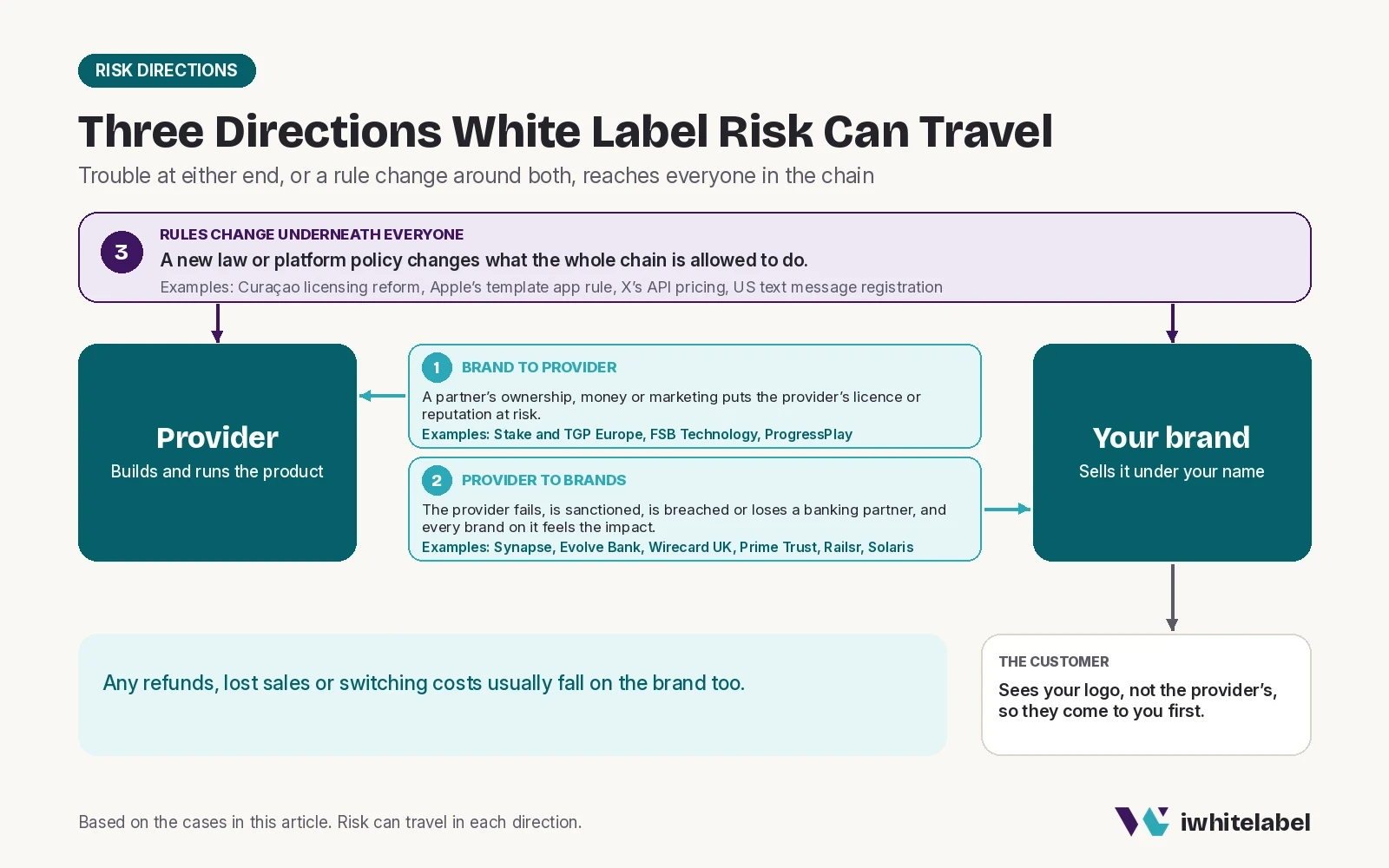
Figure 1: Three directions white label risk can travel
Types of Major White Label Software Risks
White label software risks fall into five major types due to its impact. The first three start inside the white label chain, at the provider or one of its brands, and the last two come from outside it, from a government or a platform. Checking the provider is therefore not enough on its own, and buyers also need an exit plan. Figure 2 sets out each type with the cases in this article and what they cost buyers.
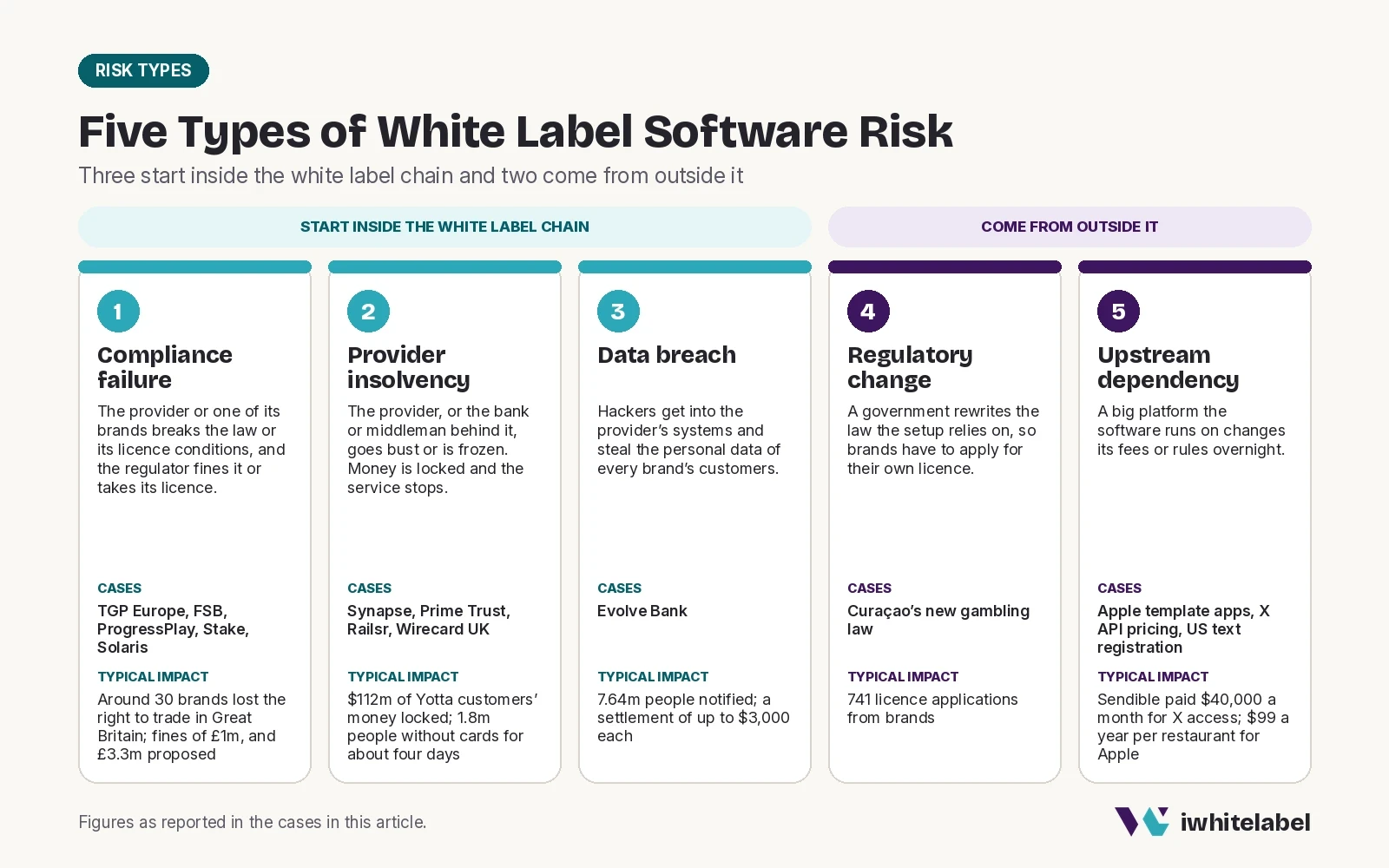
Figure 2: Five types of white label software risk
The sections below cover the cases by industry, and Table 1 tags each case with its risk type.
Gambling: Licences Shared by Many Brands
In online gambling, one provider's licence can cover many brands, so a regulator's action against the licence holder affects every brand on it. The cases below are compliance failures (type 1) and a regulatory change (type 4).
TGP Europe and the Football Sponsors
TGP Europe, an Isle of Man business, held a Great Britain gambling licence and ran betting and casino sites for other businesses' brands. All four of its licences show as surrendered on 15 May 2025 in the Gambling Commission's public register. The regulator's statement the next day explained that TGP chose to leave once it was told it faced a £3.3 million penalty and would need to raise its standards substantially to keep trading in Great Britain.
The Commission's findings were about TGP's partners, not its players. It said TGP had not checked each business involved in owning its partners, had not checked the source of funds behind its arrangements, and had not given enough thought to money laundering risk or to illegal activity by partners. TGP had already paid a £316,250 penalty in April 2023 for weak checks before taking on white label partners, among other failings.
TGP's exit left its hosted brands without a licence to trade in Great Britain. Reports put the number of TGP-hosted sites at around 30, with Gaming Intelligence counting 29. The Commission wrote to five clubs whose sponsors had traded under TGP: AFC Bournemouth (BJ88), Fulham (SBOTOP), Newcastle United (Sportsbet.io and FUN88), Wolverhampton Wanderers (DEBET) and Burnley (96.com). It warned that club officials could face prosecution if they promoted unlicensed gambling to people in Great Britain, and asked the clubs to prove their geo-blocking worked, noting that a VPN can get round it.
According to the Guardian, 13 Premier League clubs had commercial partnerships with TGP's clients in the 2024-25 season, and betting sponsors, especially Asian-facing ones, pay a premium of 20 to 40% above the usual rate. No figure has been published for the total income the clubs lost through TGP's exit, or for the number of British players affected.
Stake: A Brand's Marketing Video and TGP's Licence
Stake's British site ran on TGP's licence under a white label arrangement. TGP closed it on 11 March 2025 after the Commission opened an investigation into a widely viewed social media video showing the Stake logo, as set out in the regulator's consumer notice. Stake was Everton's main shirt sponsor in a deal reported at about £10 million a season. British players were told to withdraw their balances before the site closed.
FSB Technology: A 2020 Penalty for Weak Oversight of Partners
In May 2020 the Commission required platform supplier FSB Technology to pay £600,000, plus £34,300 in costs, over weak oversight of its white label partners, and it used its announcement to remind every licence holder of its duties to third parties. Under licence condition 1.1.2, licensees stay responsible for the third parties they work with.
ProgressPlay: One Licence, 134 Websites
ProgressPlay runs online casinos for partner brands under its own Great Britain licence, a white label platform model described by SiGMA. In May 2025 the Gambling Commission fined it £1 million after finding anti-money laundering and customer protection failings across the 134 websites it runs, and required a third-party audit of its controls. It was ProgressPlay's second penalty, after £175,718 in 2022. The Commission's own explanation of white label partnerships says responsibility for every white label site sits with the licence holder and cannot be passed to the partner.
Curaçao and Brazil: When the Rules Change
Curaçao used to let brands trade on sub-licences issued by master licence holders, a form of white labelling at licence level, and its new gambling law ended that model. The law took effect on 24 December 2024, and the regulator says the temporary certificates it issued during the move expired on 15 October 2025, which ended the sub-licence system. Every brand that wanted to stay had to apply in its own name, and the regulator received 741 applications by the April 2024 deadline. Licences under the new law cannot be transferred, which, as Gambling Insider explains, does not ban white labelling but makes each licence holder personally responsible for everything run under it.
In Brazil, under Ordinance 827 of May 2024, each five-year authorisation costs R$30 million, covers up to three brands, cannot be transferred, and requires brands to use a ".bet.br" web address. So a brand cannot trade under another business's authorisation.
Fintech: Providers and Partner Banks Behind the Brand
Many consumer apps sell accounts and cards under their own name while a provider and a partner bank run them behind the scenes, a white label model often called banking as a service, so customers see the app's name, not the provider's. In the cases below, Synapse, Wirecard UK, Prime Trust and Railsr are provider insolvencies (type 2), Evolve Bank is a data breach (type 3) and Solaris is a compliance failure (type 1).
Synapse: A Gap Between Its Records and the Banks' Balances
In Synapse's model, fintech apps offered accounts under their own names, Synapse kept the records and partner banks held the money. It connected about 100 fintech apps to partner banks, according to the bankruptcy trustee's report. It filed for bankruptcy on 22 April 2024, and on 11 May the banks froze end users' accounts after losing access to Synapse's records. Yotta's chief executive told CNBC that 85,000 of its customers, holding $112 million, were locked out.
The trustee reported a gap of $65 million to $96 million between what Synapse's records said customers held and what the banks actually had. Even after months of reconciliation, some users had still not been paid in full. By January 2025 one partner bank had paid 12 fintech apps' users in full but made only partial payments, worth about $20.8 million, to users of another 10 apps, according to the trustee's January 2025 report. Copper, a banking app for teenagers, announced it would close its deposit accounts and debit cards, as PYMNTS reported. The US consumer finance regulator later set aside $46.25 million for affected customers, according to a notice from California's financial regulator.
Evolve Bank: A Regulator Order and a Data Breach
Evolve Bank & Trust was one of the banks whose accounts fintech brands offered to customers under their own names. In June 2024 the Federal Reserve ordered Evolve to fix how it managed its fintech partners, and it must now get approval before adding new ones. Weeks later, a ransomware gang stole customer data, and Evolve told the Maine attorney general that 7,640,112 people were affected, as BleepingComputer reported.
The settlement agreement in the later class action covers about 18 million people whose data was in the affected files, names partners including Affirm, Mercury, Stripe, Wise and Yotta, and sets up a fund of $11.86 million. Each person can claim up to $3,000 for documented losses or a flat payment of about $20.
Business banking app Mercury, which says it serves more than 300,000 customers, announced in March 2025 that it was moving away from Evolve and offering customers the option to migrate their accounts to another partner bank.
Wirecard UK: Four Days Without a Card
Wirecard's UK arm issued the prepaid and debit cards that several fintech apps sold under their own brands. When its German parent collapsed in June 2020, the Financial Conduct Authority stopped the UK business from operating. Apps that relied on it, including Curve, Pockit and ANNA, could not process payments, and Axios reported that about 1.8 million people and 20,000 businesses were locked out. Pockit's users included people receiving benefits, and the government issued its own update when their cards started working again. Customer money was safe, and restrictions lifted from 30 June, but Curve was back sooner because it moved card processing to Checkout.com over the weekend, as CNBC reported.
Prime Trust and Railsr: Shortfalls and Rescue Sales
Prime Trust provided custody and payment services that crypto and fintech apps built on, and in 2021 it added a white label debit card programme so clients could issue cards in their own brand, saying at the time that it served more than 700 clients. Nevada's financial regulator told the court it owed clients $85.67 million in ordinary currency but held only $2.90 million, according to its receivership petition.
Railsr let other businesses embed cards and wallets under their own brand. It was once valued at nearly $1 billion, as TechCrunch noted when it went into administration in March 2023. Its business was sold for £414,000 to related parties, according to The Times. Service continued under the new owners. No figure has been published for what the collapse cost Railsr's clients.
Solaris: Regulator Approval Needed for New Partners
Solaris, a Berlin bank, offers white label bank accounts and cards that partners such as the app Tomorrow and the ADAC motoring club provide under their own names. In March 2024 Germany's financial regulator BaFin fined Solaris €6.5 million for systematically filing suspicious activity reports late. In July 2024 it ordered further fixes to anti-money laundering, outsourcing and IT controls, and extended the mandate of a special monitor first appointed in December 2022.
Solaris has needed the regulator's approval for every new partnership, according to Payment & Banking, which also reported that it had lost Vivid and Grover as clients. No figure has been published for what the restrictions cost Solaris's partner brands or their customers.
Beyond Finance: White Label Software Risks in Apps, Social Media and Messaging
Branded apps, social media tools and messaging platforms depend on someone else's platform, pricing or policy. When one of those changes, the reseller and its clients can face new costs or lose features. The three cases below are upstream dependency (type 5).
Branded Restaurant Apps and Apple's Template Rule
ChowNow builds ordering apps that restaurants publish under their own name, as described on ChowNow's branded apps page. In December 2017 Apple began rejecting apps built from templates and app builder services, and ChowNow said the rule put its 9,000 restaurant clients at risk, according to Vox. Another app builder, Shoutem, closed, as TechCrunch reported.
Apple later relaxed the rule for apps submitted from each business's own developer account. ChowNow now asks each restaurant to enrol in Apple's Developer Program. Membership costs $99 a year.
White Label Social Media Tools and X's API Pricing
White label social media tools rely on platform APIs to publish, report and reply on their clients' behalf. In March 2023 Twitter, now X, replaced its free API with paid tiers, including a $100 a month basic tier and an enterprise plan reported at $42,000 a month, as The Verge reported.
Sendible sells a white label version of its dashboard to agencies. It said it managed more than 20,000 X accounts and initially paid X $40,000 a month for enterprise access, and on 14 November 2023 it moved to a cheaper plan and removed X reporting, engagement and keyword monitoring for its customers, according to Sendible's own update. Publishing to X stayed available at no extra cost.
White Label Messaging and US Text Registration
HighLevel is a marketing platform that agencies resell under their own brand, down to a white label desktop app. Since 1 September 2023, US carriers have blocked text messages sent from unregistered local business numbers, and Twilio still charges its messaging rate for each blocked message. Every business texting through HighLevel's phone service must now register its brand and campaign with The Campaign Registry.
HighLevel's fee guide lists a one-off charge of $22.50 for sole traders and low-volume senders, or $64 for high-volume senders, plus a monthly fee of $10 for each standard campaign. HighLevel passes these charges on without a markup, so each client account that sends texts pays the fees and completes the registration.
The Cases at a Glance: White Label Links and Costs
Table 1 gathers every case in one place, with its risk type from Figure 2, the white label link that ties the brand to the provider and the cost to brands and their customers wherever a figure has been published. Where no source gives a number, the table says so rather than estimating.
Table 1: 14 white label cases, their links and the cost to buyers
| Case | Risk type | White label link | What happened | Cost to brands and their customers | Source |
|---|---|---|---|---|---|
| TGP Europe (2025) | 1. Compliance failure | Ran betting and casino sites for other brands under its own licence | Left Great Britain rather than face a £3.3m penalty | Around 30 brands lost the right to trade in Great Britain and 13 Premier League clubs had partnerships with its clients, with no published total for lost income | Gambling Commission |
| Stake (2025) | 1. Compliance failure | Brand trading in Great Britain on TGP's licence | British site closed after an investigation into a promotional video | Players told to withdraw their balances, and an Everton deal reported at about £10m a season left with a brand no longer licensed in Great Britain | SportsPro |
| FSB Technology (2020) | 1. Compliance failure | Platform supplier with white label partners | Penalty for weak oversight of those partners | £600,000 plus £34,300 costs paid by the provider | Gambling Commission |
| ProgressPlay (2025) | 1. Compliance failure | Runs casino sites for partner brands under its own licence | Anti-money laundering and customer protection failings | £1m penalty and a third-party audit covering 134 websites | Gambling Commission |
| Curaçao (2024-25) | 4. Regulatory change | Brands traded on sub-licences from master licence holders | Sub-licence model ended by a new law | 741 applications for brands' own licences, with no published figure for the cost | CasinoBeats |
| Synapse (2024) | 2. Provider insolvency | Middleware behind accounts that fintech apps sold under their own names | Collapsed, and partner banks froze accounts | 85,000 Yotta customers with $112m locked out, a $65m to $96m gap, and partial payouts for 10 apps' users | Trustee report |
| Evolve Bank (2024) | 3. Data breach | Partner bank behind accounts sold by fintech brands | Regulator order, then a ransomware breach | 7.64m people notified, about 18m in the settlement with up to $3,000 each for documented losses, and Mercury customers offered a move to another bank | Settlement agreement |
| Wirecard UK (2020) | 2. Provider insolvency | Issued the cards sold by Curve, Pockit, ANNA and others | Frozen by the regulator | About 1.8m people and 20,000 businesses without their cards for about four days | Axios |
| Prime Trust (2023) | 2. Provider insolvency | Custody and white label debit cards for crypto and fintech apps | Placed into receivership | $85.67m owed to clients against $2.90m held | Nevada regulator |
| Railsr (2023) | 2. Provider insolvency | Cards and wallets embedded under clients' brands | Went into administration and was sold for £414,000 | Service continued under new owners, with no published figure for client losses | The Times |
| Solaris (2024) | 1. Compliance failure | White label accounts and cards for Tomorrow, ADAC and others | €6.5m fine, a special monitor and approval needed for new partners | Two named clients left, with no published figure for partners' costs | BaFin |
| Apple template apps (2017) | 5. Upstream dependency | Ordering apps published under each restaurant's own name | App Store rule against template apps | 9,000 restaurants put at risk, Shoutem closed, and brands now pay $99 a year for their own developer account | Vox |
| X API pricing (2023) | 5. Upstream dependency | White label social media dashboard resold by agencies | Free API replaced with paid tiers | Sendible paid $40,000 a month, then removed X reporting, engagement and monitoring | Sendible |
| US text registration (2023) | 5. Upstream dependency | Marketing platform resold under agencies' own brands | Texts from unregistered numbers blocked | $22.50 or $64 one-off plus $10 a month per standard campaign, for each business sending texts | HighLevel |
What Regulators Now Expect From White Label Chains
Regulators in many countries say in writing that a business can use someone else's technology but keeps responsibility for the result. Table 2 summarises the main rules white label buyers and providers are likely to meet.
Table 2: 18 rules on third parties and white label chains, by country and region
| Where | Rule and date | What it means for the chain | Source |
|---|---|---|---|
| European Union | Digital Operational Resilience Act, applies from 17 January 2025 | Financial firms must list their technology providers, set out data locations, audit rights and exit plans in their terms, and watch for relying too heavily on one provider. | EUR-Lex |
| European Union | Anti-Money Laundering Regulation, applies from 10 July 2027 | Firms must tell their supervisor before outsourcing checks, stay fully liable, and keep key decisions such as reporting suspicious activity in-house. | EUR-Lex |
| EU and UK | GDPR and UK GDPR, since 2018 | Software providers handling personal data need written terms covering sub-processors, audits and breach alerts, and the brand usually has 72 hours to report a breach. | EUR-Lex |
| European Union | NIS2 Directive, national laws due by 17 October 2024 | Organisations in critical sectors must manage supply chain security and give an early warning of serious incidents within 24 hours. | EUR-Lex |
| European Union | AI Act, with high-risk rules applying from 2 December 2027 after the 2026 update | A business offering an AI feature under its own brand needs to know whether the law treats it as the provider or the user of that system. | European Commission |
| United Kingdom | Operational resilience rules, deadline 31 March 2025 | Financial firms must map which important services rely on outside providers and show they can stay within set limits during severe disruption. | FCA |
| United Kingdom | Critical third parties regime, from 1 January 2025 | Large providers named by the Treasury face direct oversight, while firms keep their own duties. | FCA |
| Great Britain (gambling) | Licence condition 1.1.2 | Licence holders are responsible for the third parties they work with and must be able to end those arrangements quickly. | Gambling Commission |
| United States | Interagency guidance on third-party relationships, June 2023 | Banks must manage partners from planning to exit, and using a third party does not reduce their responsibility. | Federal Register |
| United States | FDIC proposed rule on custodial account records, September 2024 (a proposal, not yet a final rule) | Banks holding money for fintech customers would keep their own record of each person's balance and reconcile it daily. | FDIC |
| Singapore | Outsourcing guidelines and Notice 658, from 11 December 2024 | Banks must check and monitor providers, plan for disruption and keep access for the regulator. | MAS |
| Australia | CPS 230 Operational Risk Management, from 1 July 2025 | Regulated firms keep a yearly register of key providers, and their agreements must cover data ownership, audit access and the providers' own key suppliers. | APRA |
| India | IT outsourcing directions (October 2023) and Digital Lending Directions (2025) | Lenders stay fully liable for the apps and service providers that work on their behalf. | Reserve Bank of India |
| Canada | Guideline B-10 Third-Party Risk Management, from 1 May 2024 | Federally regulated firms must manage all third-party arrangements, not only outsourcing, in line with the risk. | OSFI |
| UAE and Saudi Arabia | Central bank outsourcing rules for banks | Banks need the regulator's no-objection before material outsourcing. | CBUAE |
| Nigeria | Baseline Standards for automated AML solutions, 10 March 2026 | Banks have 18 months and other institutions 24 months to run automated anti-money laundering systems, and any firm applying for authorisation must demonstrate it meets the standards, or has a credible plan to do so. | Central Bank of Nigeria |
| Brazil (betting) | Ordinance 827, May 2024 | Each authorisation covers up to three brands and cannot be transferred. | Ministry of Finance ordinance |
| Curaçao (gambling) | National Ordinance for Games of Chance, from 24 December 2024 | Brands need their own licence rather than a sub-licence. | NEXT.io |
In guidance issued with its baseline standards, the Central Bank of Nigeria says it "does not approve, certify, or endorse AML solutions or technology providers". It looks at whether the institution itself can show the controls are governed and effective, so buying a well-known tool does not make a business compliant.
Reducing White Label Software Risks: What Buyers and Providers Can Learn
Table 3 gives ten lessons drawn from the cases above, and several of them match the issues in our guide to white label SaaS drawbacks and how providers can fix them. It links each lesson to the cases behind it and to the risk types from Figure 2 that it covers.
Table 3: Ten lessons for white label buyers and providers
| Lesson | For buyers (agencies, resellers, brands) | For providers (vendors and licence holders) | Cases behind it | Covers |
|---|---|---|---|---|
| Plan your exit early | Make sure you can export clients and data and move them if the provider fails, is sold or loses its licence. | Offer clear export tools and migration guides, which also reassure regulators. | Synapse, Railsr, Evolve Bank, Curaçao | Provider insolvency, regulatory change |
| Keep your own records | Hold your own copy of customer data and, where money is involved, balances. | Share records with clients and partner banks every day. | Synapse, Prime Trust | Provider insolvency |
| Check who you are trading with | Look up your provider's licence on the regulator's register and ask how it vets other clients. | Check partners' owners and source of funds, not just their paperwork. | TGP Europe, FSB Technology, ProgressPlay | Compliance failure |
| Watch the marketing | Remember that your sponsors and promotions reflect on the licence you trade under. | Review partner brands' marketing as closely as their ownership. | Stake | Compliance failure |
| Have a second option for critical services | Know which provider you would switch to for payments, cards, banking or messaging. | Support more than one gateway, processor, bank or upstream supplier. | Wirecard UK, Evolve Bank, Solaris, X API | Provider insolvency, upstream dependency |
| Agree how incidents are reported | Find out how quickly the provider will tell you about a breach so you can warn your own clients. | Publish a status page and send prompt, honest incident reports. | Evolve Bank | Data breach |
| Register in your own name | Use your own developer, app store and messaging registrations where you can. | Track platform rule changes and give clients steps to adapt early. | Apple template apps, X API, US text registration | Upstream dependency |
| Review regularly | Check the provider's finances, ownership and security every year, not only when you sign up. | Be open about funding and ownership changes. | Railsr, Synapse, Solaris | Compliance failure, provider insolvency |
| Prefer open source code for critical software | Check whether the code is published under an open source licence, so you or another developer could keep the product running if the provider closes, is sold or raises its prices, and read the licence terms before you build on it. | Publish the core under a recognised open source licence and keep it maintained with regular security updates. | Any provider that closes, is sold or changes its prices | Provider insolvency, data breach |
| Consider self-hosting for critical software | Ask whether the product can run on your own servers or private cloud, and what happens to your licence if the provider closes. | Offer a self-hosted or private cloud edition, or document how a client could move to one. | Synapse, Prime Trust, and the data rules in Table 2 | Provider insolvency, regulatory change |
Open Source and Self-Hosting: Reducing Dependence on One Provider
Two lessons in Table 3 go further than checking a provider: choosing open source code and running the software yourself. Open source software, as the Open Source Initiative defines it, comes with its source code and a licence that lets anyone use, change and share it. For a white label buyer, that means that if the provider closes, is sold or raises its prices, you or another developer can keep the product running, and your own team or an auditor can inspect the code for security problems. Matomo, for example, is open source web analytics with a paid white label option, and it can run on your own servers. Running open source software on your own servers gives you control of both the code and the servers.
Open source software has risks of its own. Someone has to apply updates and security patches, and a project can lose its community or its main sponsor. Licence terms matter too: some open source licences require you to share changes you distribute, and some "source available" licences that look similar restrict commercial use or rebranding. The free open source edition of Countly, for instance, cannot be white labelled, so check which edition carries the white label rights.
White Label Due Diligence: A Checklist Before You Sign Up
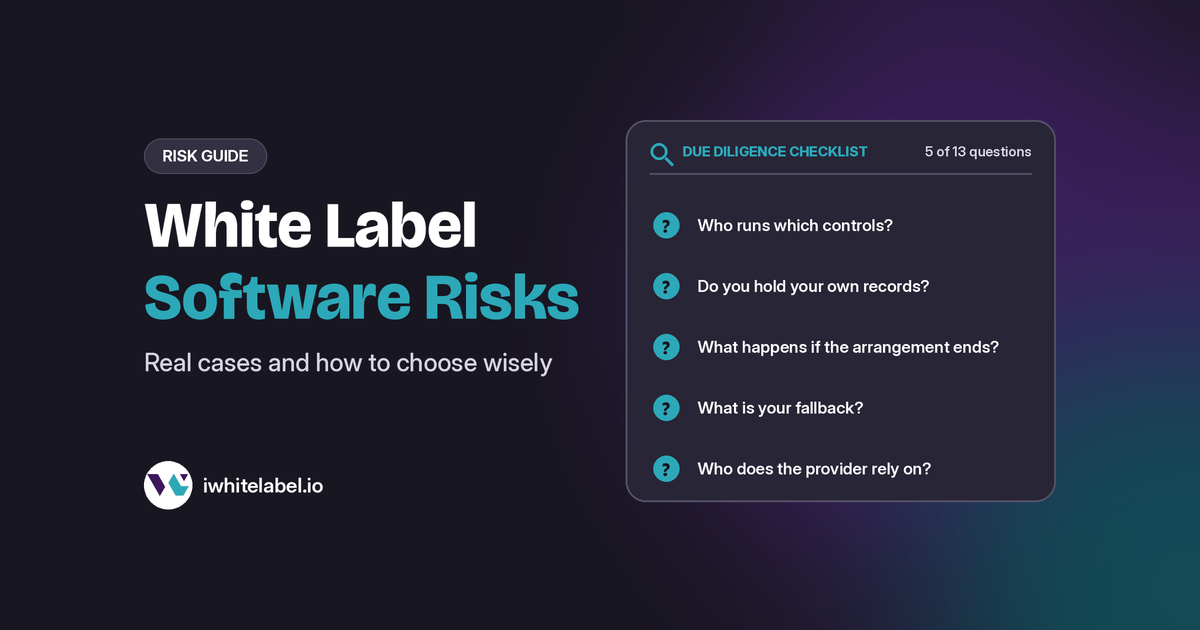
These thirteen questions come from the lessons in Table 3 and are written to ask in a sales call, and Table 4 after the list shows what to look for in security certifications, audit reports and data protection laws. Each one is backed by at least one of the rules or cases in this article, and each notes the risk types from Figure 2 it guards against.
Who runs which controls? Know which checks, monitoring and reports the provider handles and which stay with you, because the regulator will hold the licence holder accountable either way. Covers: Compliance failure.
Can you and your regulator look inside? Confirm that your auditors and, where relevant, your regulator can see the provider's logs and systems. Covers: Compliance failure, data breach.
How does the provider choose its other clients? One poorly checked partner can bring scrutiny on everyone sharing the platform. Covers: Compliance failure.
What happens if the arrangement ends? Ask how you would get customer data, and any customer money, back if the arrangement or the licence ends suddenly. Covers: Provider insolvency, regulatory change.
Where is the data kept? Check the countries where data is stored and processed against your clients' and regulators' rules. Covers: Data breach, regulatory change.
Who does the provider rely on? Ask which cloud, banking or card partners sit behind the product and whether you will hear about changes. Covers: Upstream dependency, provider insolvency.
How fast will you hear about an incident? You need enough time to meet your own reporting deadlines, such as 72 hours under GDPR. Covers: Data breach.
Do you hold your own records? Keep your own copy of customers and, where relevant, balances so you do not depend on the provider's ledger alone. Covers: Provider insolvency.
What is your fallback? Know which second provider you could switch to for the services that matter most. Covers: Provider insolvency, upstream dependency.
When will you check again? Put a yearly review in the diary covering the provider's finances, ownership, security and licence status. Covers: Compliance failure, provider insolvency.
Which independent security checks has the provider passed? Ask for an ISO/IEC 27001 certificate or a SOC 2 Type II audit report, and check that it covers the product you are buying and is still current, as Table 4 explains. Covers: Data breach, compliance failure.
Will the provider put the data protection terms the law requires in place? GDPR and HIPAA are laws, not certifications, so for personal data in the EU or UK ask for the processing terms GDPR requires, and for US health data ask whether the provider will enter into a Business Associate Agreement. Covers: Compliance failure, data breach.
Is the code open source, and can you run it yourself? Open source code means you or another developer could keep the product running if the provider closes or changes its prices, and running it on your own servers adds control of the data, but check the licence terms and who will apply security updates. Covers: Provider insolvency, data breach.
Security Standards and Data Protection Laws: What to Look For
ISO/IEC 27001 is an independent certification, SOC 2 Type II is an independent auditor's attestation report, and GDPR and HIPAA are laws with no official certificate. Table 4 labels each type and shows what to ask for.
Table 4: Security certifications, audit reports and data protection laws
| Name | Type | What it shows | What to ask for | Covers |
|---|---|---|---|---|
| ISO/IEC 27001 | Independent certification | The provider runs an information security management system that an independent certification body has checked against the international standard. | The certificate, the name of the accredited body that issued it, the scope statement (does it cover the product you are buying?) and the issue and expiry dates. | Data breach, compliance failure |
| SOC 2 Type II | Independent audit (attestation) report | An independent auditor's report, under the AICPA's SOC standards, on how the provider's controls worked over a period of time, whereas a Type I report looks at a single date. | The latest report, usually shared in confidence, plus the period it covers (there is no fixed minimum, and many cover six to twelve months), the systems and criteria in scope, any exceptions the auditor found, and a bridge letter for the time since the period ended. | Data breach, compliance failure |
| GDPR (DSGVO in German) | Law (EU and UK) | Sets the rules for handling personal data, and only a few voluntary schemes are approved under Article 42, so a "GDPR compliant" badge on its own proves little. | The processing terms required by Article 28, the current list of sub-processors, where data is stored, and how any transfer outside the EU or UK is covered. | Compliance failure, data breach |
| HIPAA | Law (US health data) | Sets the rules for US health data, and there is no official certification, since the US health department does not recognise private HIPAA certifications. | Whether the provider will enter into a Business Associate Agreement before it handles any health data, which US rules require for cloud and software providers. | Compliance failure, data breach |
A certificate or audit report shows that controls existed and were checked, not that a breach cannot happen, and meeting a law is an ongoing duty rather than a badge. Use all four alongside the other questions in the checklist.
How to Choose a White Label Provider
White label software lets a business add a product or a recurring offer without building it. If you are weighing that up as an agency, our guide to building recurring revenue with white label software covers the commercial side.
The cases in this article show what to do before and after you sign up: check the provider, keep your own records and review the provider every year. Providers often do not publish everything in one place, which we cover in why white label software is so difficult to research.
Frequently Asked Questions
These answers draw on the cases and rules covered above. They are general information, not legal advice for your market.
Often, yes, at least in the eyes of your customers and, in regulated sectors, your regulator. The Gambling Commission holds licence holders responsible for the third parties they work with, and US banking guidance says using a third party does not reduce a bank's responsibility. Brands trading under someone else's licence are affected too: in 2025 the Commission wrote to five football clubs whose sponsors had traded under TGP Europe.
White label software risks fall into five types: compliance failure, provider insolvency, data breach, regulatory change and upstream dependency. The first three start inside the white label chain, while the last two come from outside it, such as Curaçao's new gambling law or Apple and X changing their rules. That is why buyers need an exit plan as well as checks on the provider.
Both handle large amounts of customer money and are closely regulated, so a failure quickly becomes frozen accounts or an unlicensed brand. In the Synapse collapse, 85,000 Yotta customers holding $112 million were locked out, and TGP Europe's exit left around 30 hosted brands without a licence in Great Britain, including sponsors of five football clubs.
No. Apple's 2017 rule on template apps affected app builders and the restaurants using them, X's 2023 API pricing led white label social tool Sendible to pay $40,000 a month before cutting features, and US text registration rules mean every business texting through a resold marketing platform such as HighLevel pays its own registration and monthly fees.
Start with who runs which controls, whether you and your regulator can inspect the provider, how it checks its other clients, and how you would leave. Then check where data is kept, who the provider relies on, how fast it reports incidents, whether you keep your own records, what your fallback is, when you will review it again, and which independent security checks and data protection terms it can show you, and whether the code is open source.
The two independent security checks you are most likely to see are an ISO/IEC 27001 certification and a SOC 2 Type II report, which is an auditor's attestation rather than a certificate. Check that the scope covers the product you are buying and that the dates are current. GDPR and HIPAA are laws, not certifications, so instead of a badge, ask for the processing terms GDPR requires or, for US health data, a Business Associate Agreement.
It can. With open source code, you or another developer can keep the product running if the provider closes, is sold or raises its prices, and the code can be inspected for security problems. Running it on your own servers goes further, because you control both the code and the data. You still need someone to apply updates and security patches, and you should check the licence, since some editions or "source available" licences restrict commercial use or rebranding.
Not usually. The Central Bank of Nigeria, for example, says it does not approve, certify or endorse anti-money laundering solutions or technology providers, and it judges whether the institution itself can show its controls work.
Offer clear data export and migration tools, share records with clients regularly, check partners' ownership and source of funds, support more than one payment or card partner, and report incidents promptly and honestly.