
Why Finding the Right White Label Software Is Harder Than It Should Be
If you have ever searched for White Label software, you probably know the experience. You open a few “best White Label software” lists, compare a handful of products, visit vendor websites, and somehow end up with more questions.
One article says a platform is fully White Label. Another calls it White Label because it offers branded reports. A third includes it in a roundup without explaining what can actually be branded.
We've even seen SaaS websites use “White Label” in their SEO description tag <meta name="description" content="..."> without providing any real explanation of White Label functionality on the page itself.
That makes something that should be fairly straightforward surprisingly difficult: finding software you can actually put behind your own brand.
Why Is Finding White Label SaaS So Confusing?
Part of the problem is that “White Label” has become a broad term. For example, when searching for White Label software, you will run into terms such as White Label rebranding and White Label SaaS reselling. They are related, but they aren't interchangeable.
White Label rebranding generally means taking an existing product and presenting it under your own brand. That could include your logo, colors, domain, client portal, emails, or other customer-facing elements.
White Label SaaS reselling goes a step further. You're not simply using the software internally; you're packaging it into your own offer and selling it to customers.
If you're new to the terminology, the White Label Software Glossary is a useful reference. And for a broader explanation of how White Labeling works and how it differs from ordinary reselling, see our guide to What Is White Labelling? A Guide to White Label Software.
For an entrepreneur looking for branded reporting, those options can mean something very different from what they mean to an agency trying to launch an entire software platform.
White Label Doesn't Mean the Same Thing Everywhere
This is where a lot of White Label software lists become difficult to use. The phrase sounds specific, but in practice it can describe anything from putting your logo on a PDF report to running an entire customer-facing platform under your own domain.
A platform might let you brand reports but leave its own name throughout the application. Another might give you a custom domain but keep the provider visible in emails or support. Another might offer a branded client portal, while a fourth gives you an API and expects you to build the customer experience yourself.
All four might appear in a search for “White Label software.”
They are not offering the same thing.
If you're an entrepreneur that simply wants branded monthly reports, basic branding might be enough. If you're trying to launch a software platform that customers will use every day, you'll probably care much more about custom domains, branded portals, emails, account structures, and whether the original provider ever appears in front of your customers.
So when a vendor says “we offer White Label,” don't stop there. Ask what that actually means.
What can you actually brand?
The logo is usually the easy part. The useful questions start with everything around it: Can you use your own domain? Can you remove the vendor's branding? Can you create branded client accounts? What happens to automated emails? Can you customize the login experience? Can you create separate workspaces for customers?
These details are what turn White Labeling from a cosmetic feature into something you can actually build a business around.
Our White-Label Capability Framework looks at these capabilities in more detail, because the “White Label” phrase on its own doesn't tell you much.
The Problem With Generic Software Lists
This is where the problem becomes more than an inconvenience.
Does Ahrefs Offer White Label?
Ahrefs provides a useful example of why this can get confusing. Its own Help Center states that White Labeling its reports is not supported, yet a February 2026 article from LLMPulse.ai includes Ahrefs in a list of White Label SEO software.
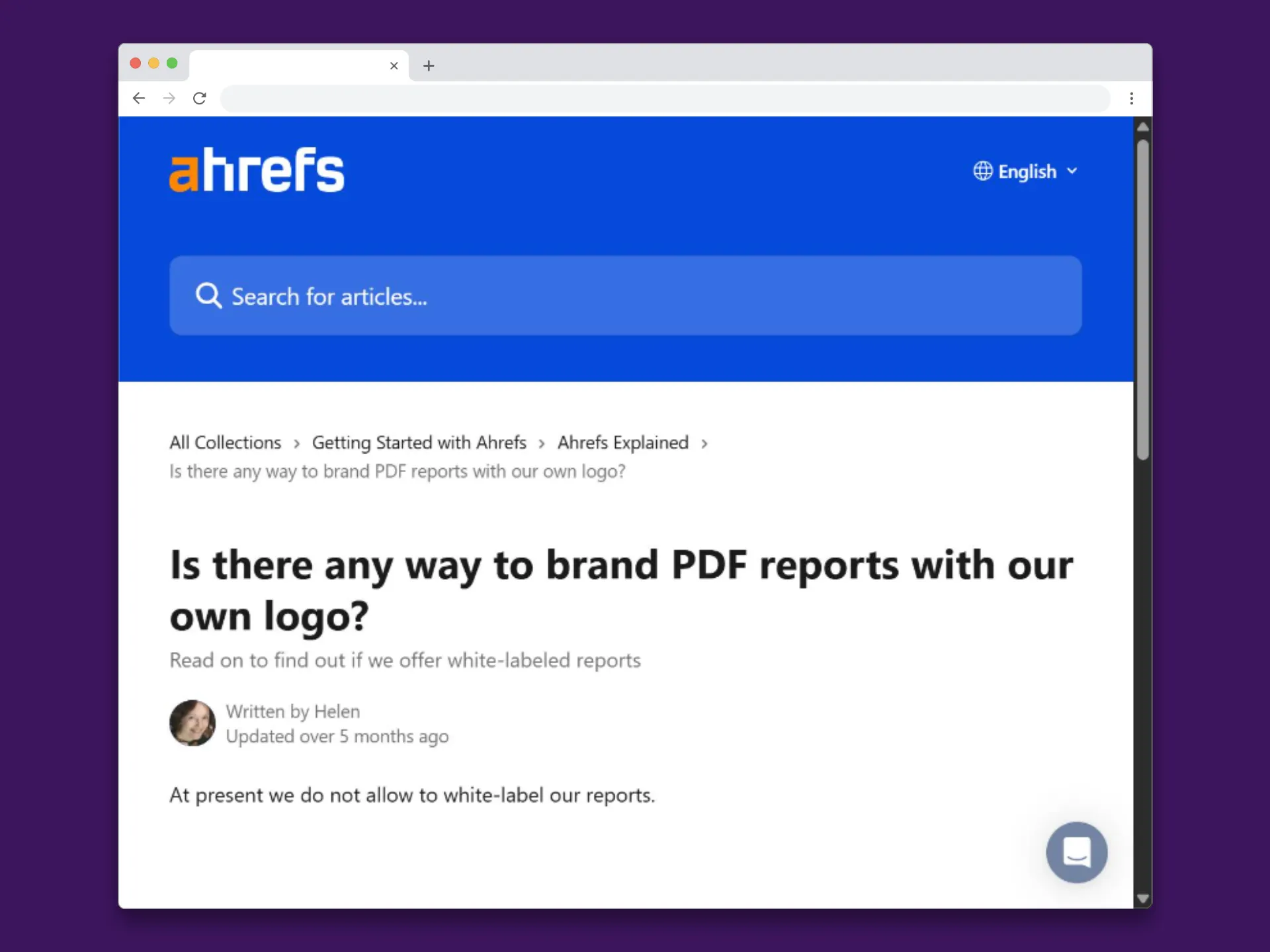
Ahrefs' own Help Center states that White Labeling PDF reports is not supported.
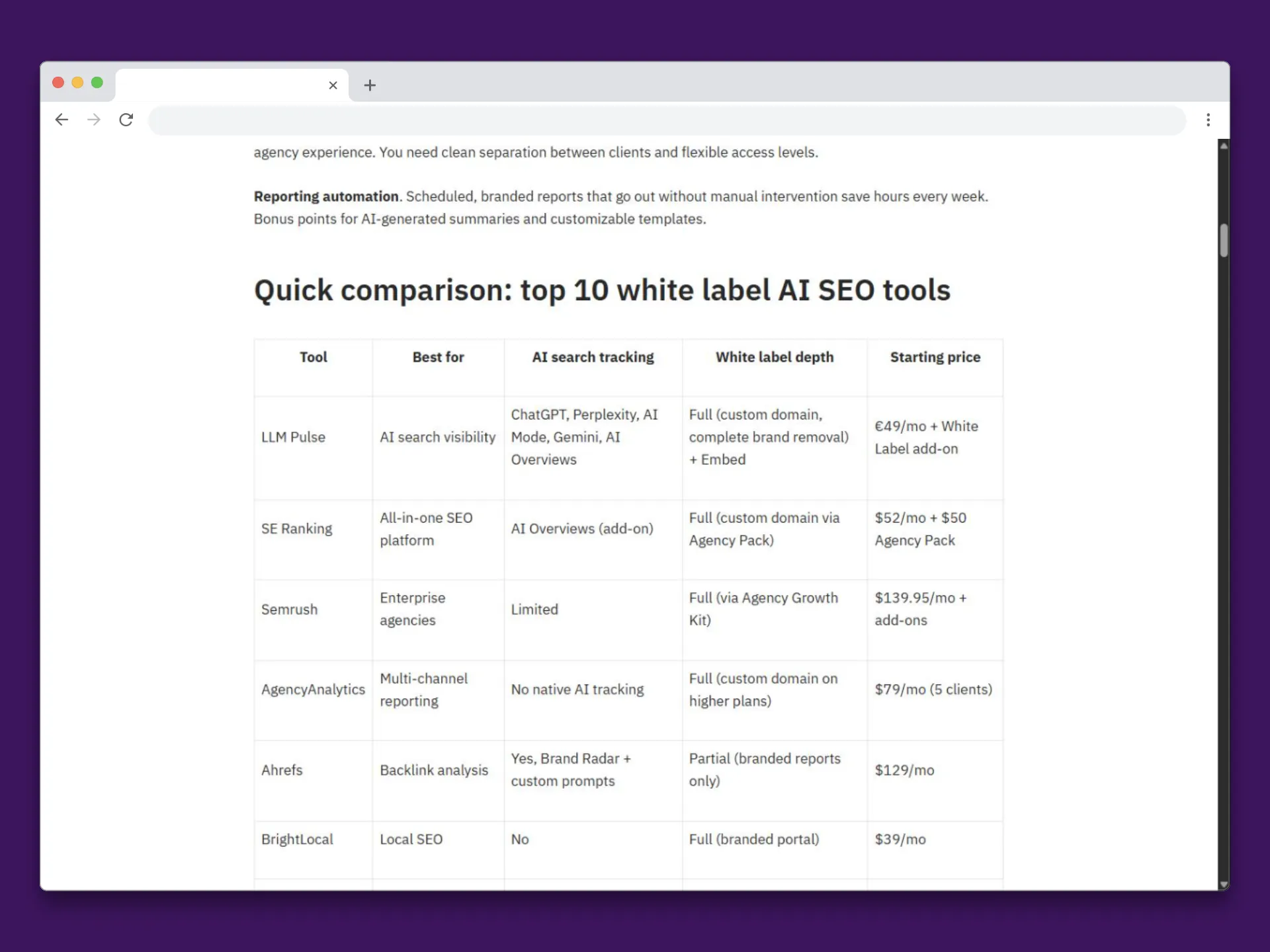
A February 2026 third-party article lists Ahrefs as a White Label SEO solution.
For someone researching software, that's a pretty awkward contradiction. The vendor's own documentation says one thing, while a third-party article recommends the same product for a capability the vendor says it doesn't provide.
And this is exactly where things get messy. A buyer might discover the third-party article first, see Ahrefs presented as a White Label option, and only later find the vendor's documentation saying otherwise. The third-party article may be outdated, the feature may have been misunderstood, or the product may simply have been included without enough verification.
Whatever the reason, the buyer is left doing the fact-checking.
Does MailerLite Offer White Label?
MailerLite is another example of how easily White Label information can become muddled. In its own Help Center, MailerLite clearly states that it does not offer a White Label version for resellers. Yet Octeth's roundup of White Label email marketing software includes MailerLite among the solutions it recommends.
The contradiction particularly easy to see.
Maybe the article was outdated. Maybe an agency feature was mistaken for White Label functionality. Maybe the distinction between using MailerLite for clients and actually reselling a branded version was overlooked. There are several possible explanations, but from a buyer's perspective, the result is the same: you're left trying to work out which information you can trust.
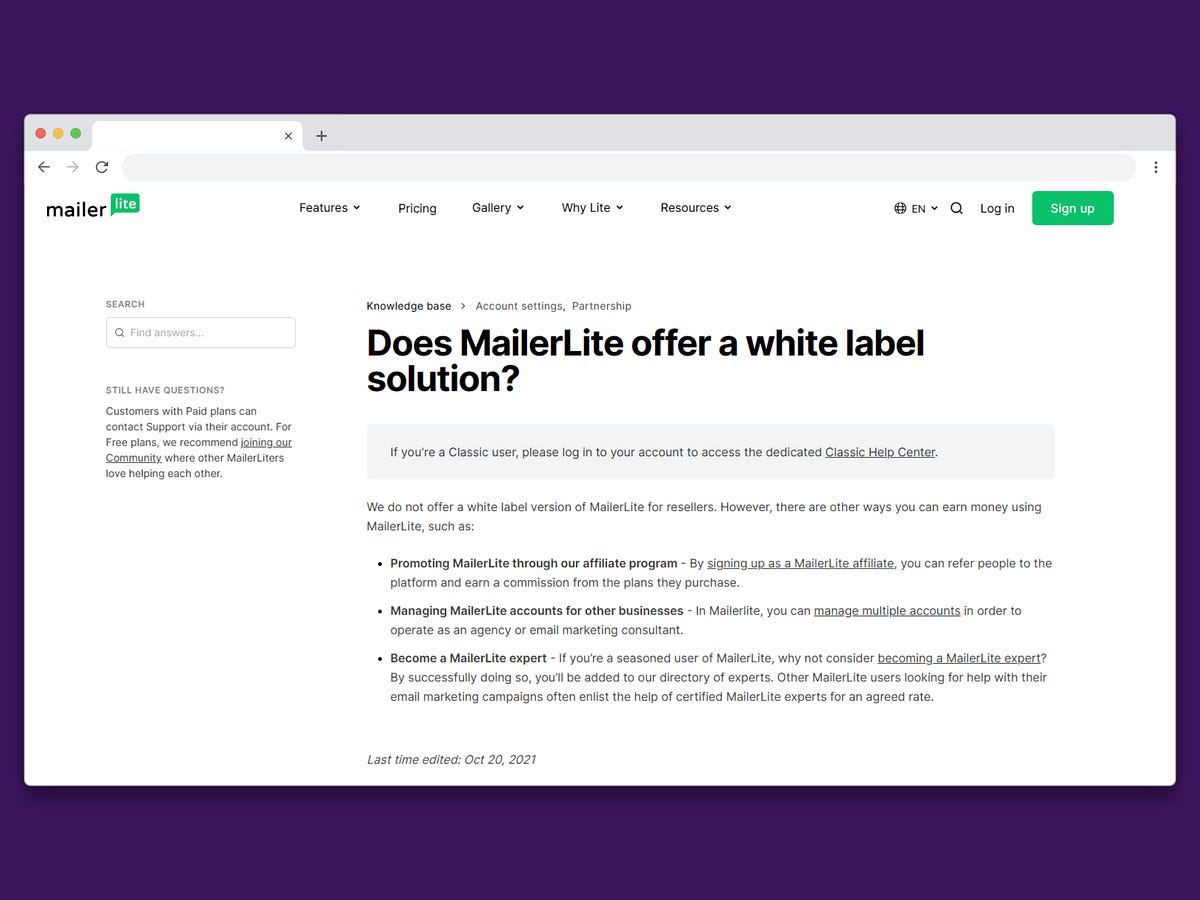
MailerLite Help page stating “We do not offer a white label version of MailerLite for resellers”
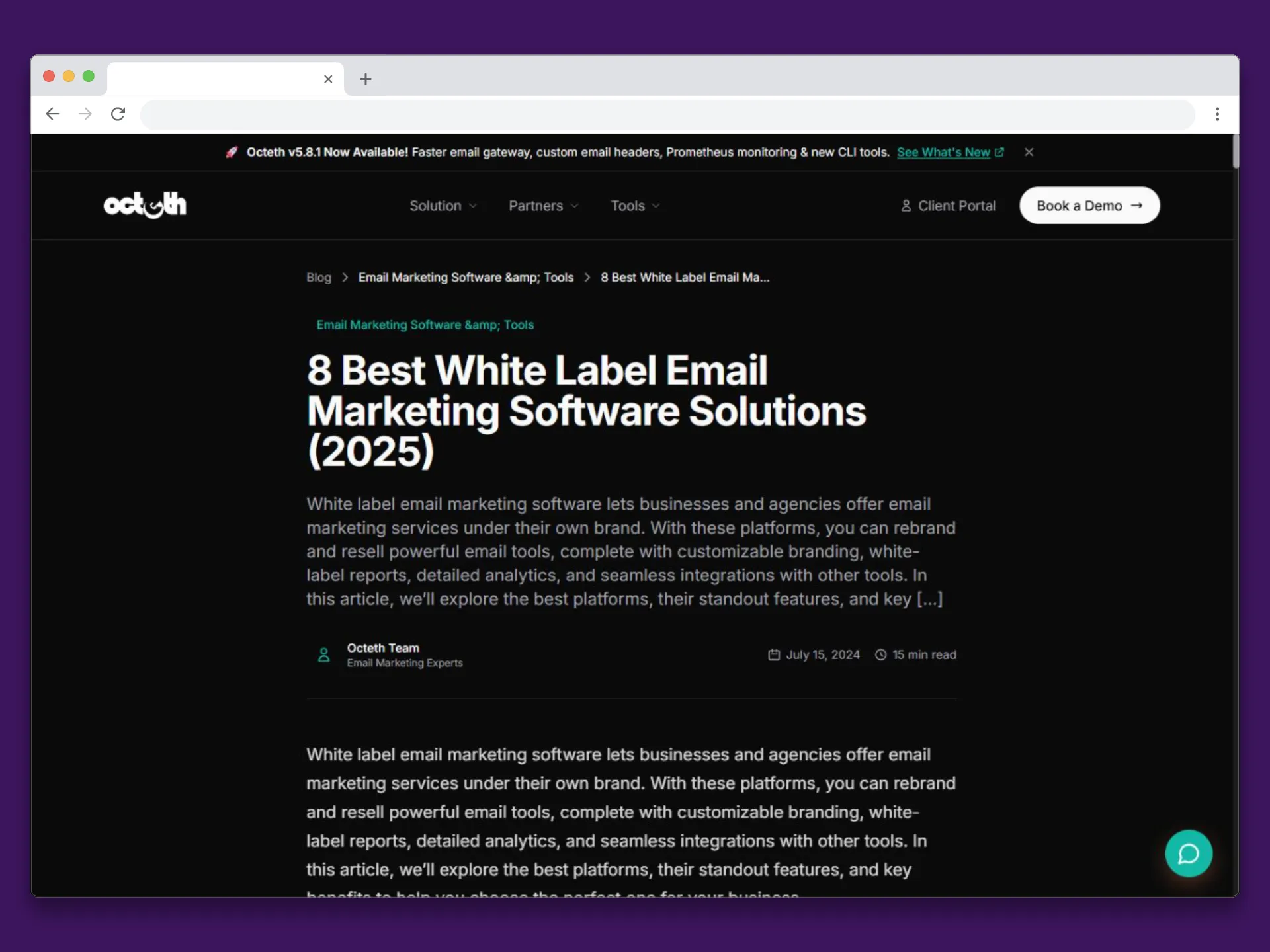
The Octeth article presents itself as a roundup of White Label email marketing software for reselling
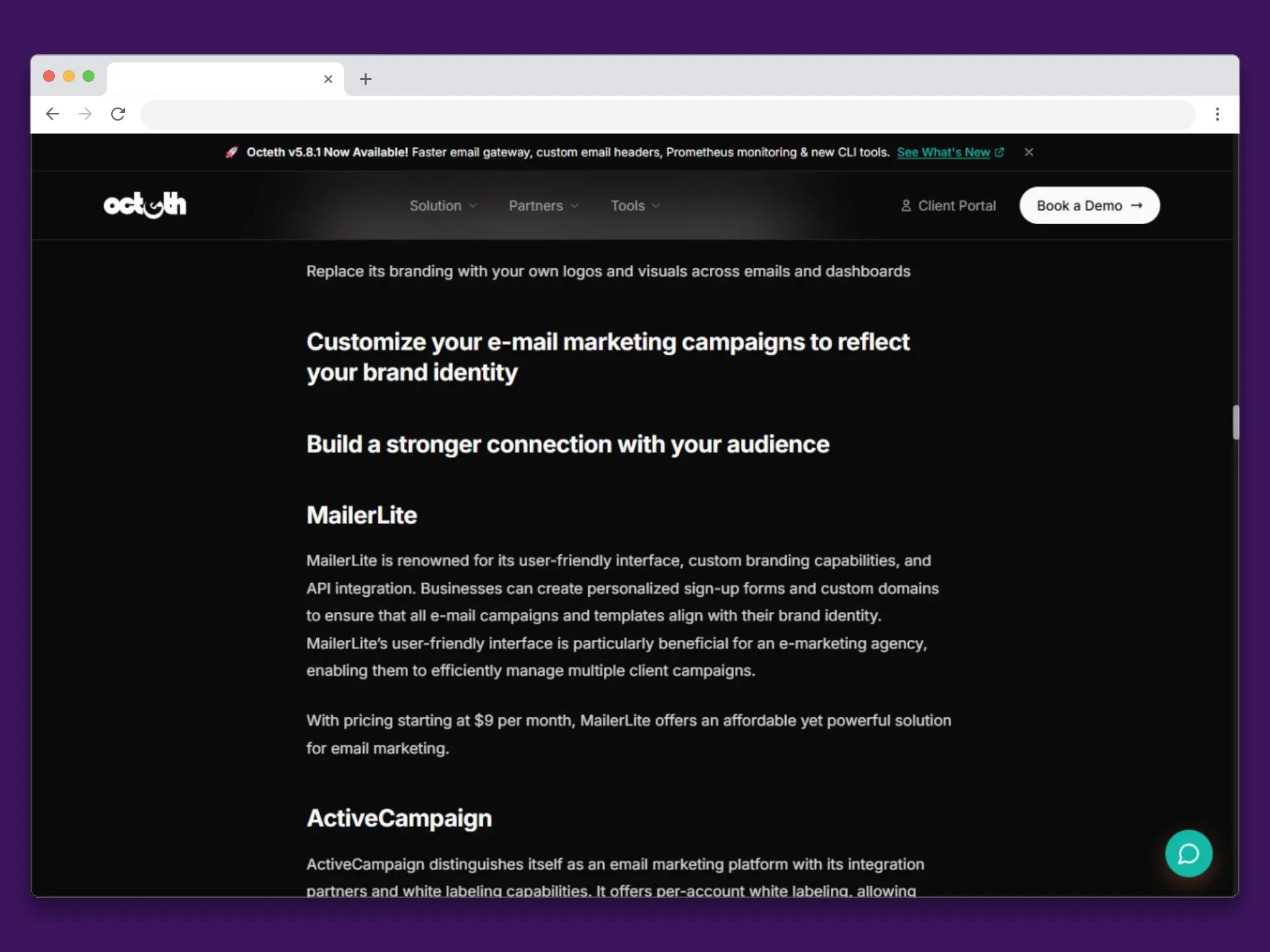
The same roundup includes MailerLite as one of its recommended White Label email marketing solutions.
What Should You Look For?
Don't stop at the words “White Label.”
Start with the provider's own documentation. Does it have a dedicated White Label page? Is there a knowledge base article explaining how the feature works? Can you see screenshots or a product demonstration? What exactly can be branded, and what remains under the provider's control?
A dedicated page explaining White Label functionality is a much stronger signal than a mention buried in a blog post.
The same goes for client management, integrations, custom domains, account structures, and other features that may matter to your particular business. The White-Label Capability Framework provides a structured way to think about those capabilities rather than treating White Label as a simple yes-or-no feature.
Why iwhitelabel Was Built
There are already plenty of places to find software: SaaS directories, review websites, affiliate roundups, “best tools” articles, and vendor marketplaces.
But most of them start with the software.
iwhiteabel starts with the White Label use case.
The question isn't simply whether a product is good. It's whether an agency can use it as a branded platform for clients, whether a reseller can build an offer around it, or whether an entrepreneur can use it as part of a new software business.
That changes what information matters.
Branding depth matters. Customization matters. Scalability matters. Integrations matter. Client management matters. And the evidence behind the White Label claim matters.
You can browse the iwhitelabel directory to compare White Label software and services across different categories and use cases.
Who Is iwhitelabel For?
The directory is built for agencies, resellers, consultants, MSPs, SaaS entrepreneurs, freelancers, educators, and businesses that want to add software or services without building everything from scratch.
An agency might want branded reporting. A consultant might want to package software into a recurring service. An MSP might want another platform to offer clients. A SaaS entrepreneur might want to launch a product without developing every underlying component.
White Label software and service providers can also submit their product to iWhitelabel.
The Bottom Line
There is no shortage of White Label software.
What is missing is reliable, useful information about what “White Label” actually means for each product.
A vendor may offer branded reports but not a branded platform. An agency plan may not mean White Labeling. An old article may describe a feature that no longer exists. And sometimes the words “White Label” are doing more work in an SEO description than they are on the actual product page.
That's the problem iwhitelabel is trying to address. iwhitelabel is a curated directory where resellers and businesses can find their next growth driver.
We organize and analyze White Label software and services across categories. We don't just list solutions. We break them down so you can see the things that actually matter. Because when you're putting your own brand behind someone else's technology, “White Label” isn't enough. You need to know what you're actually getting.