White Label Reporting & Analytics

Unlock white-label reporting and analytics software. Customize dashboards, deliver branded insights, and scale your agency with powerful data intelligence tools.

Visit website Databrain

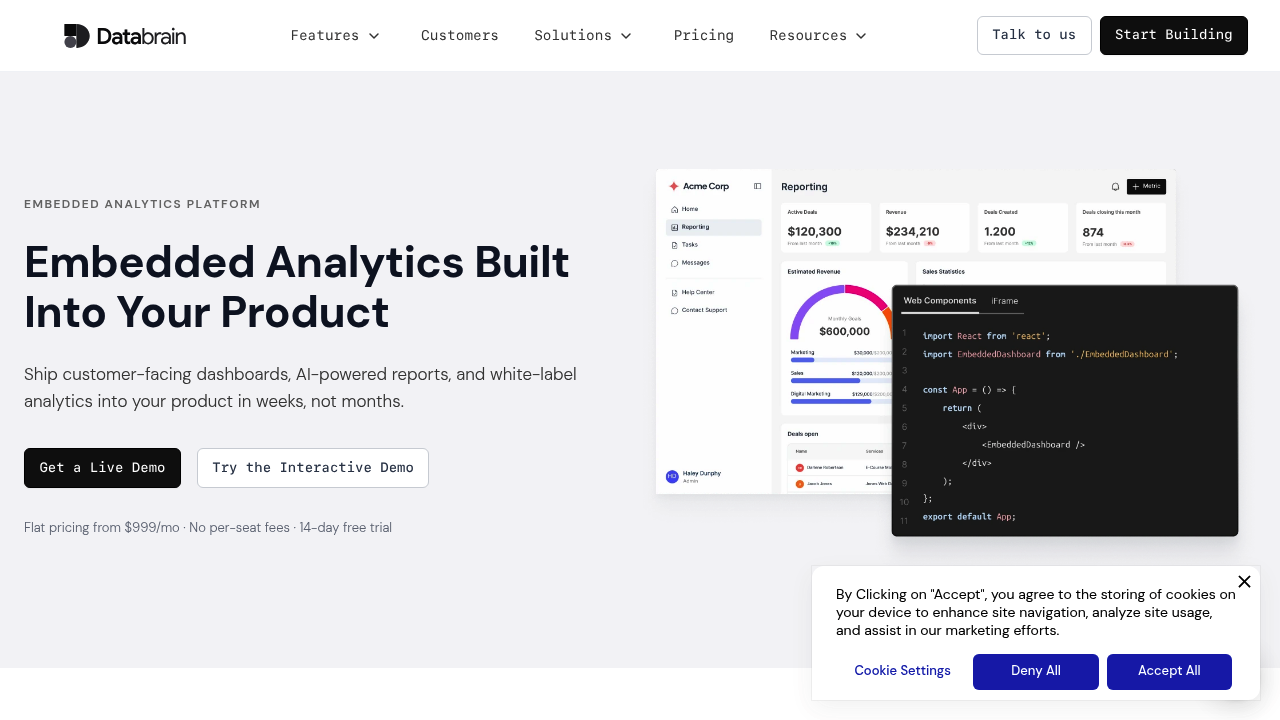
Launch AI-powered dashboards in days, not months. Databrain lets you embed fully white-labeled, multi-tenant analytics in your app with minimal coding

Reporting & Analytics
Agency Fit Fully White-Label⚡ SaaS Builder Fit
34 DR
Vote for this project
Visit website Desktop screenshot of Swydo web interface

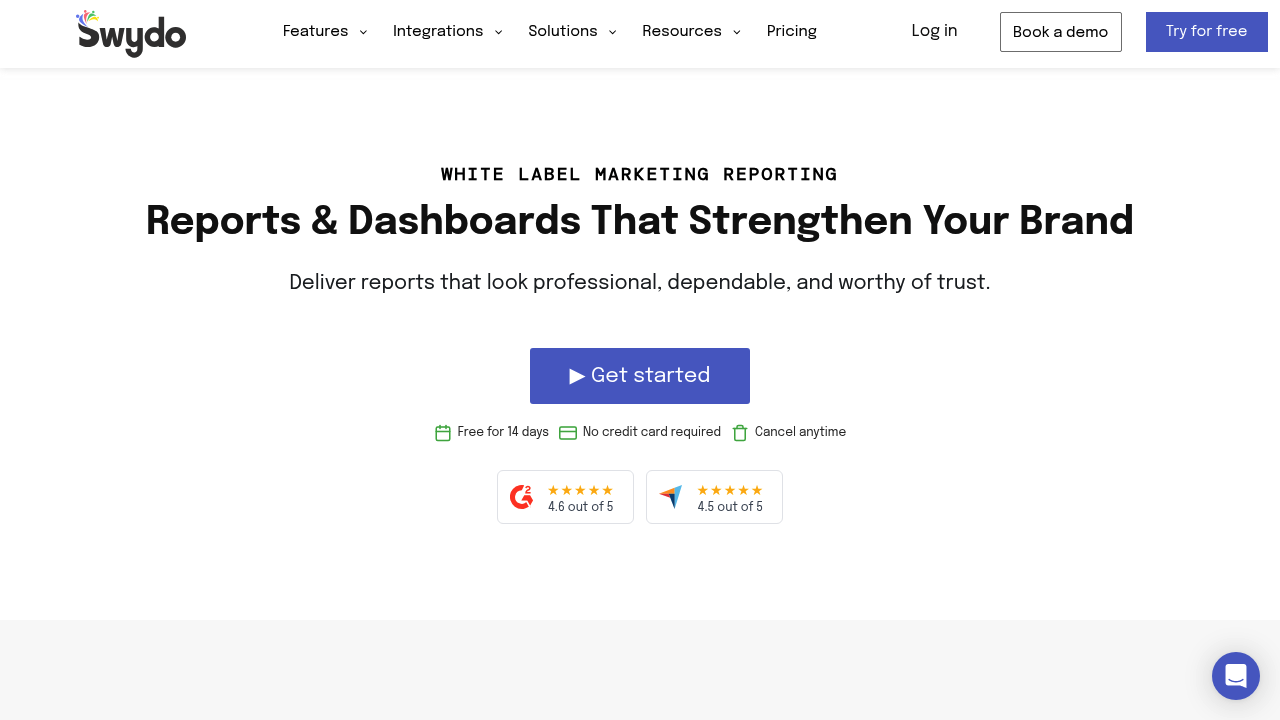
White label your marketing reports with Swydo to build trust and strengthen your brand using your logo, colors and your own domain.

Reporting & Analytics
71 DR
Vote for this project
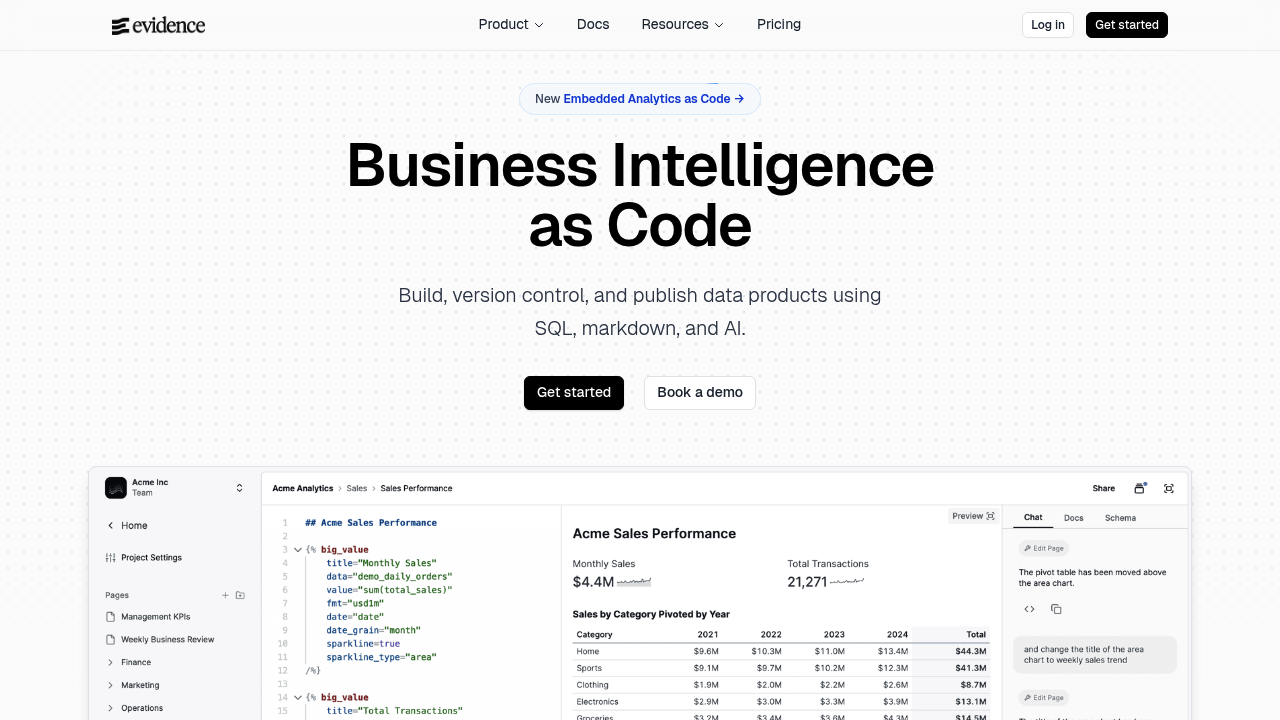
Visit website Desktop screenshot of Evidence web interface

Evidence is an open source, code-based alternative to drag-and-drop BI tools. Build polished data products with just SQL and markdown.

Reporting & Analytics
65 DR
Vote for this project
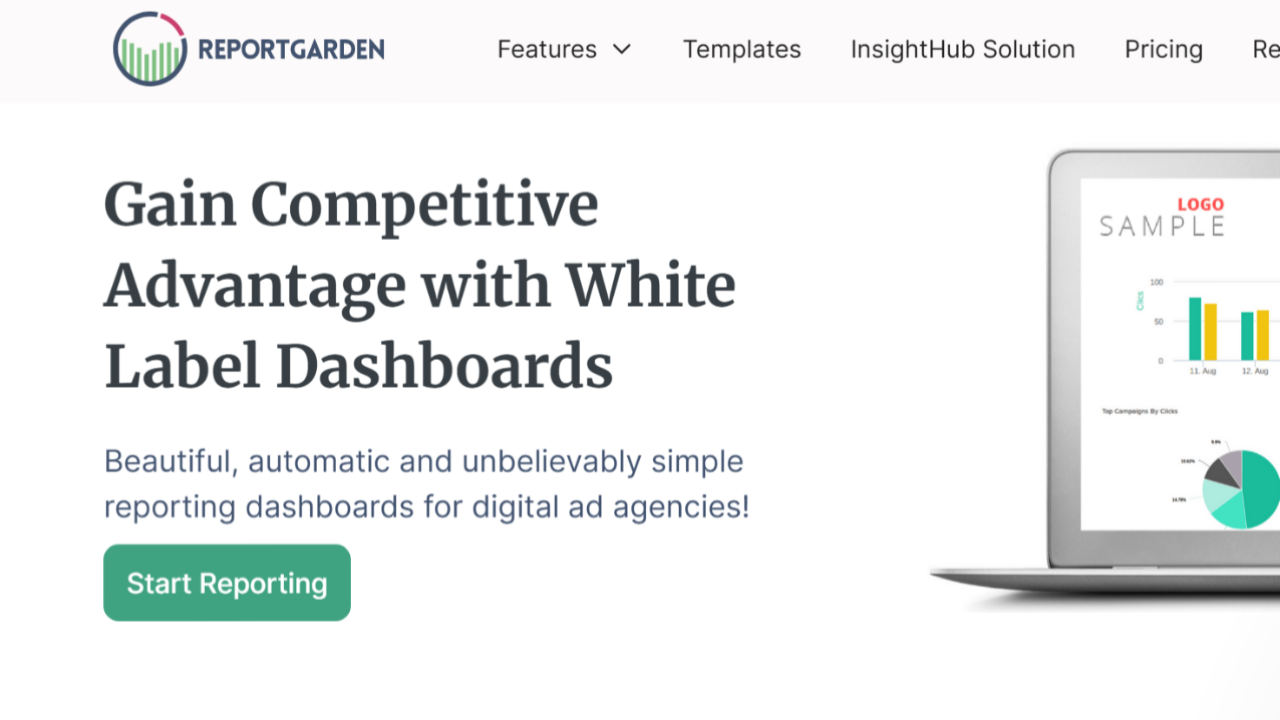
Visit website Desktop screenshot of ReportGarden web interface

ReportGarden helps you create customized white label dashboards by providing multiple widgets that can be added. You can select the type of data you would like to use and a visualization is created on the fly.

Reporting & Analytics
Agency Fit Enhanced White-Label🔋
71 DR
Vote for this project
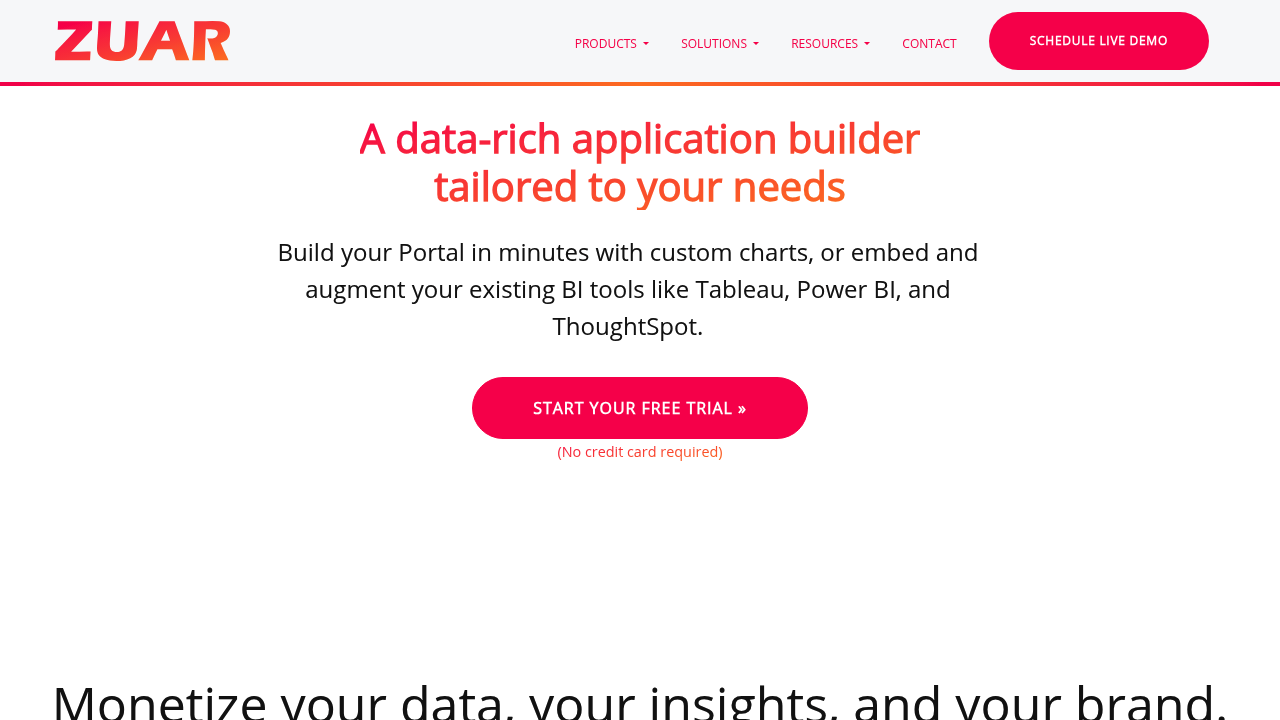
Visit website Desktop screenshot of Zuar web interface

Perfect for Professional Services Organizations, Zuar Portal offers white label BI tools to maximize the impact of your visual analytics, improve end user experience, and enhance your brand.

Reporting & Analytics
Agency Fit Enhanced White-Label🔋 SaaS Builder Fit
53 DR
Vote for this project
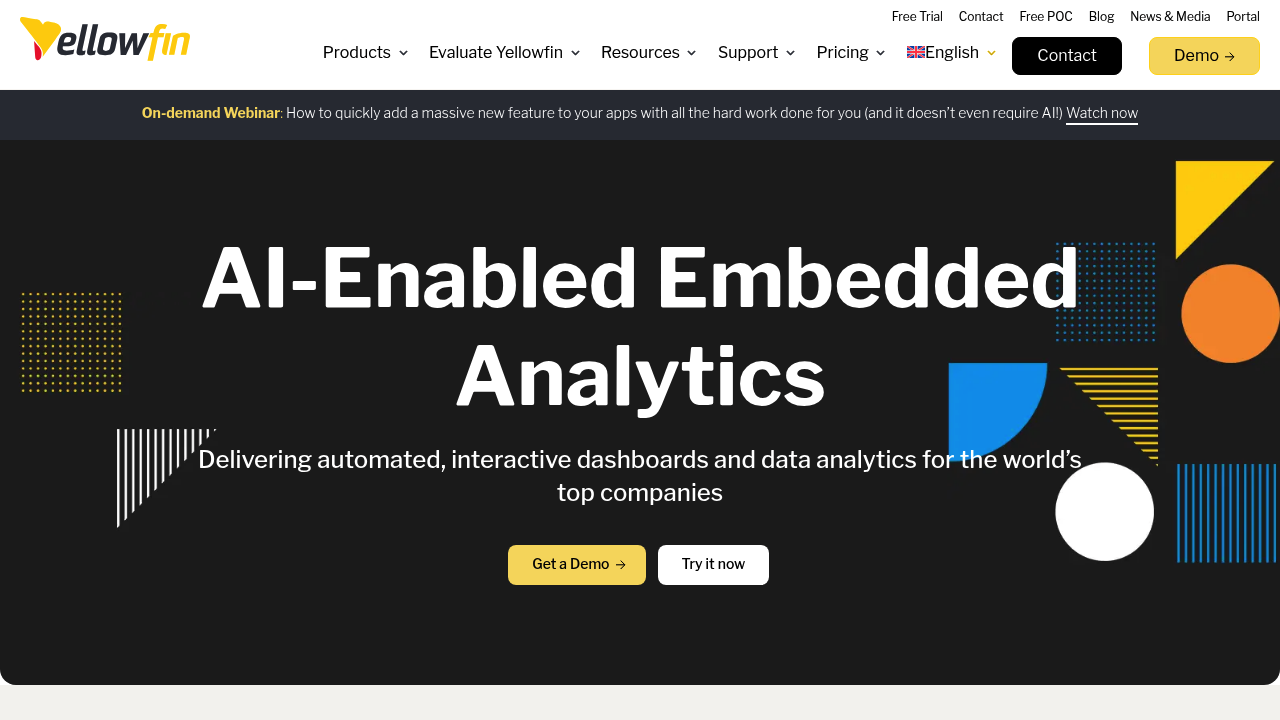
Visit website Desktop screenshot of Yellowfin web interface

Find out how Yellowfin BI’s integrated analytics platform takes you beyond data and dashboards with data transformation, creation of analytical apps, market leading collaboration tools and more. White-label every element so analytics feel like a native part of your app.

Reporting & Analytics
Enhanced White-Label🔋 SaaS Builder Fit Solution Integrator Fit
71 DR
Vote for this project
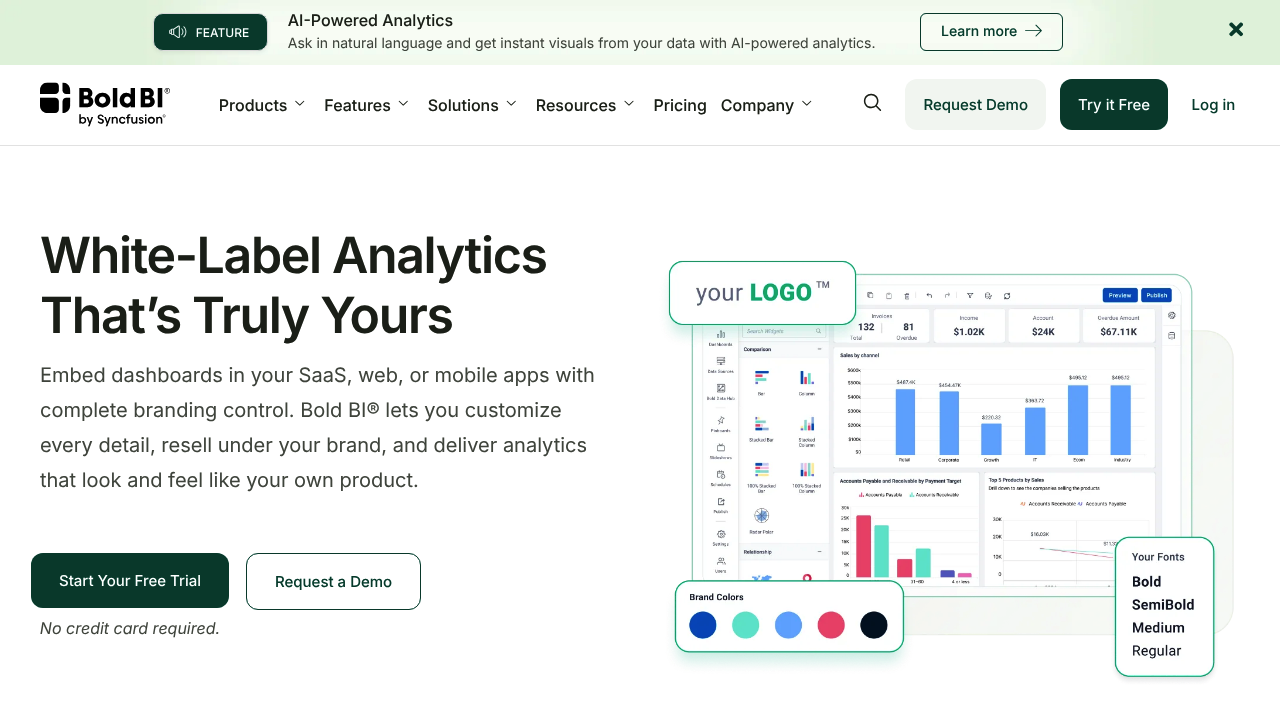
Visit website Desktop screenshot of Bold BI web interface

White-label analytics with seamless embedding, custom branding, and full control—personalize visuals, themes, domains—your brand, your way.

Reporting & Analytics
Fully White-Label⚡ SaaS Builder Fit Solution Integrator Fit
62 DR
Vote for this project
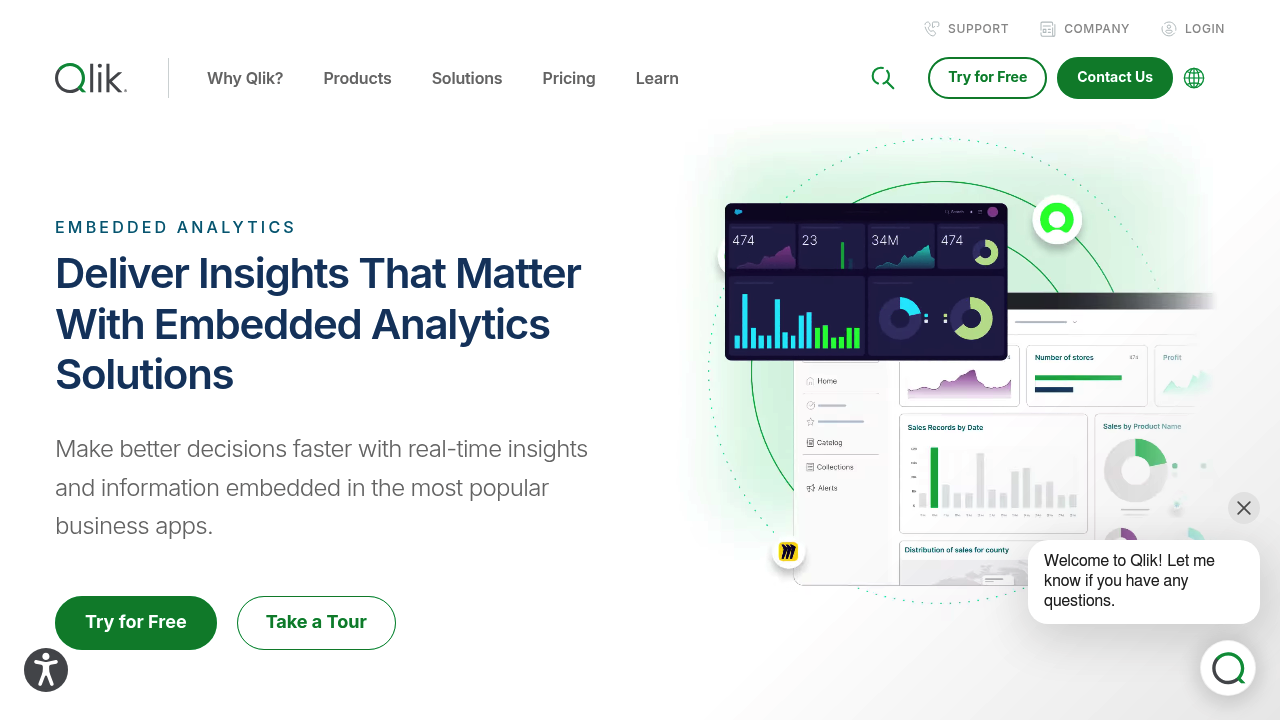
Visit website Desktop screenshot of Qlik web interface

Qlik Embedded Analytics Solutions enable you to embed analytics into your applications, providing insights at the point of decision. White-label your apps from the start or add customizations later.

Reporting & Analytics
Enhanced White-Label🔋 SaaS Builder Fit Solution Integrator Fit
83 DR
Vote for this project

Visit website Desktop screenshot of Sisense web interface

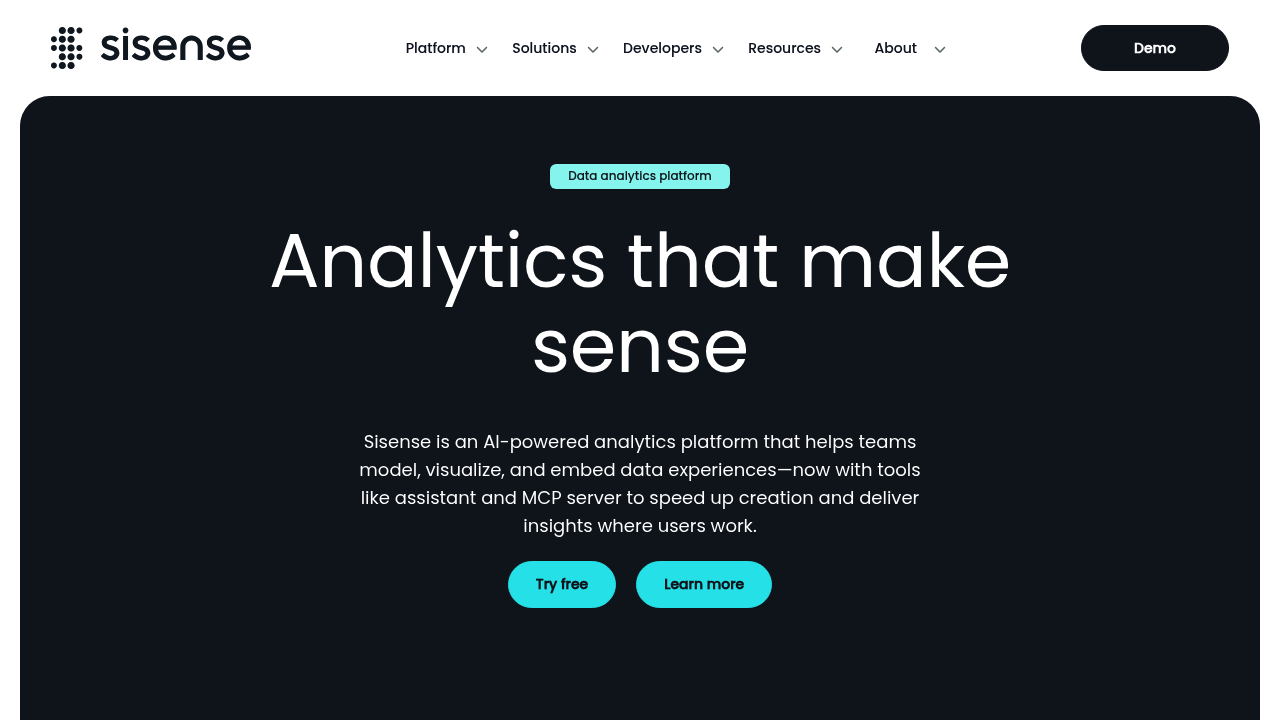
Sisense is an AI-powered analytics platform that helps teams model, visualize, and embed data experiences. Sisense has a list of branding parameters that can be further adjusted to white label your application.

Reporting & Analytics
Fully White-Label⚡ SaaS Builder Fit Solution Integrator Fit
78 DR
Vote for this project
Visit website Desktop screenshot of TIBCO web interface

Backed by 25 years of continuous modernization, TIBCO’s real-time, AI-enabled composable & white labelled platform connects your enterprise, amplifying its intelligence for smarter, faster decisions.

Reporting & Analytics
81 DR
Vote for this project
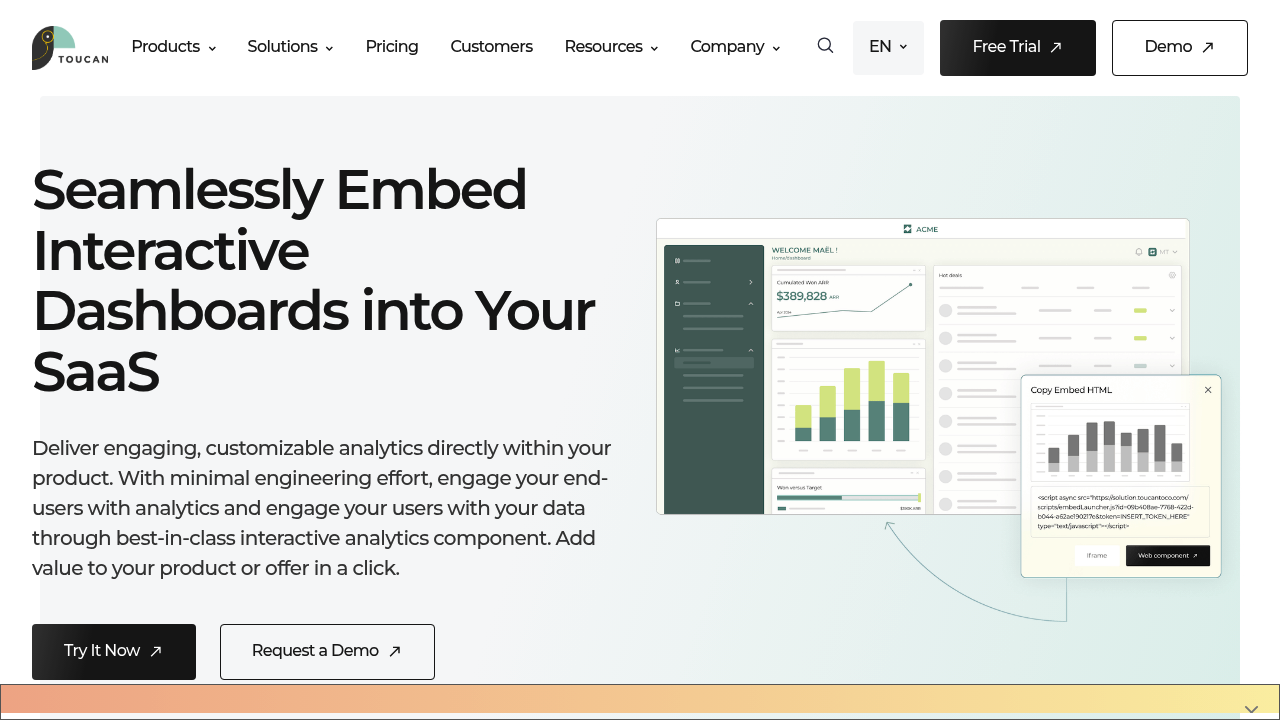
Visit website Desktop screenshot of Toucan web interface

Embed white-label dashboards into your SaaS with just a few lines of code. Enhance user experience, drive engagement, and unlock the full potential of your data—without the technical complexity

Reporting & Analytics
63 DR
Vote for this project
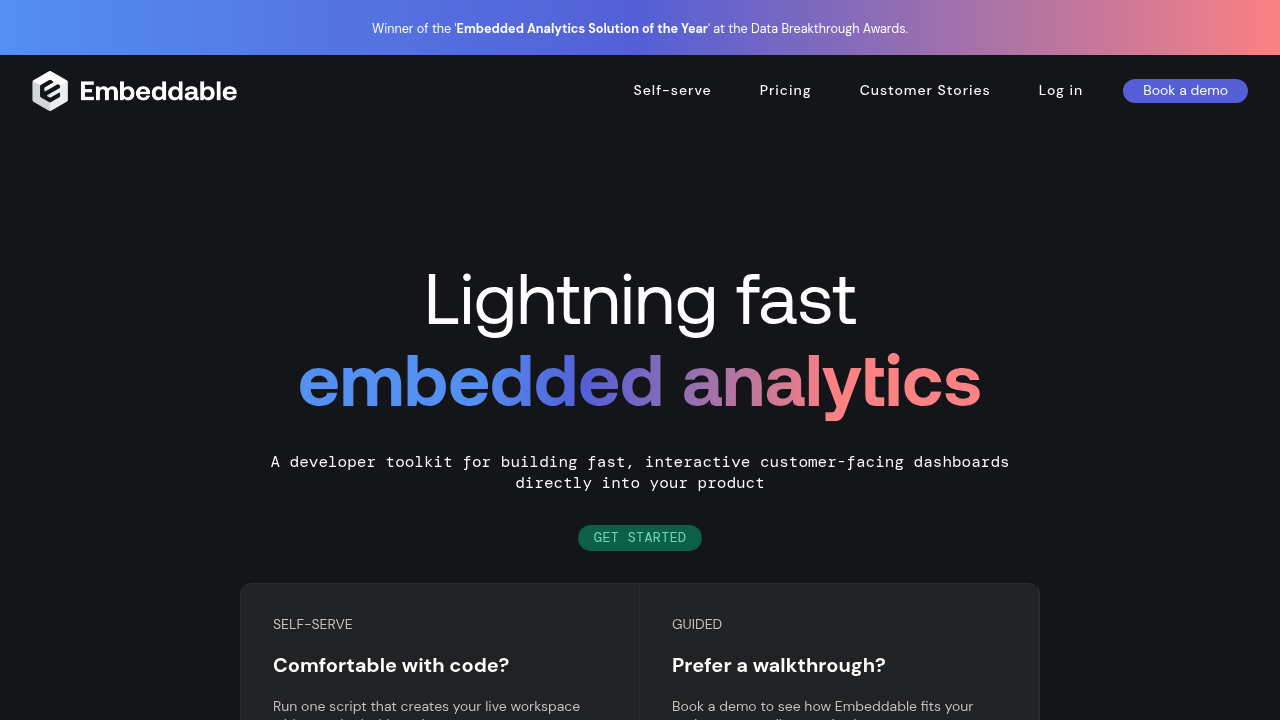
Visit website Desktop screenshot of Embeddable web interface

Embeddable is a developer toolkit for crafting remarkable customer-facing analytics experiences into your app, in just 10% of the time. Embeddable is fully white-label by default – there is no vendor UI or branding at all in the end product.

Reporting & Analytics
53 DR
Vote for this project
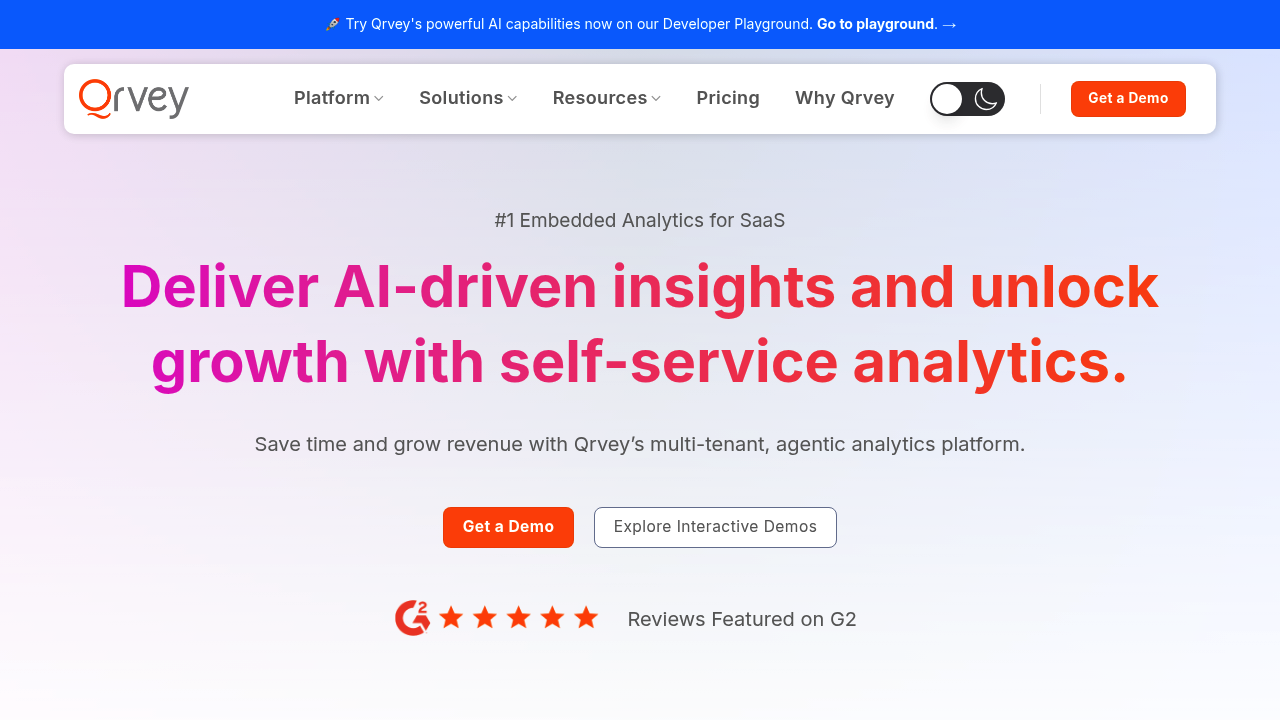
Visit website Desktop screenshot of Qrvey web interface

The most complete embedded analytics solution built exclusively for SaaS applications. See why SaaS leader choose Qrvey for white labelled embedded analytics.

Reporting & Analytics
Agency Fit Fully White-Label⚡ SaaS Builder Fit
55 DR
Vote for this project
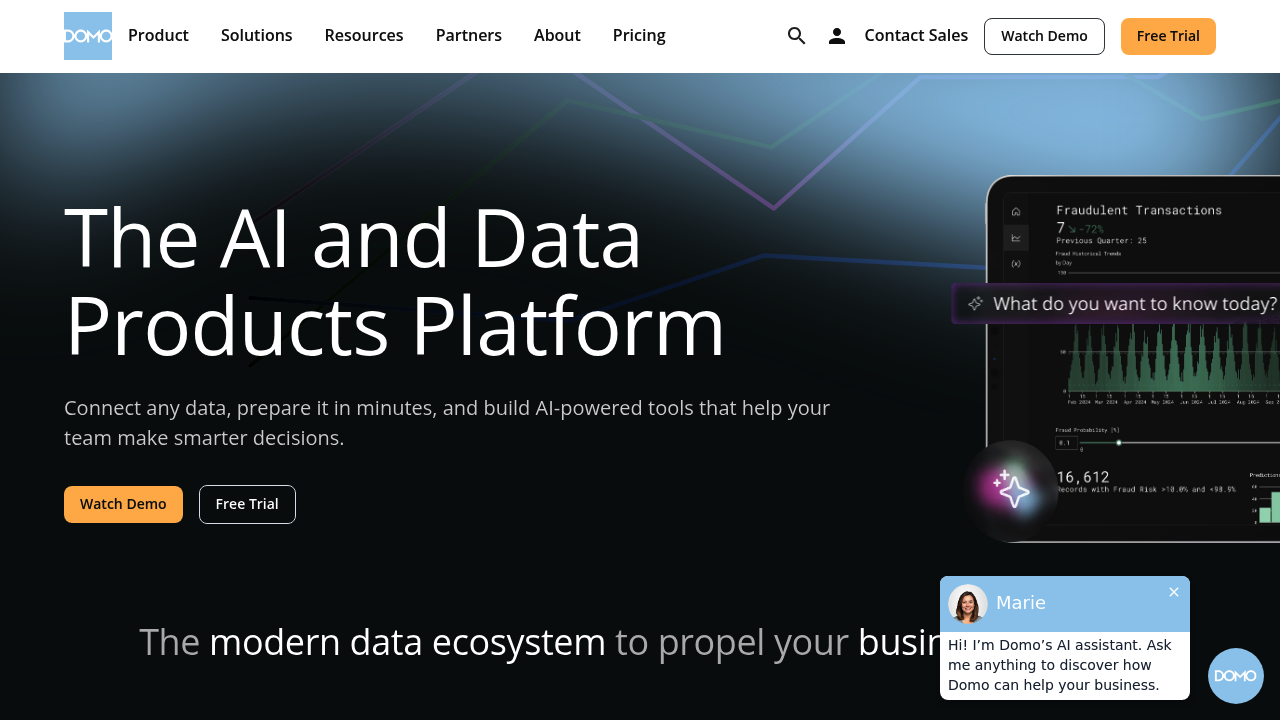
Visit website Desktop screenshot of Domo web interface

Strengthen your entire data journey with Domo’s white labelled AI and data products. Connect and move data from any source, prepare and expand data access for exploration, and accelerate business-critical insights.

Reporting & Analytics
81 DR
Vote for this project

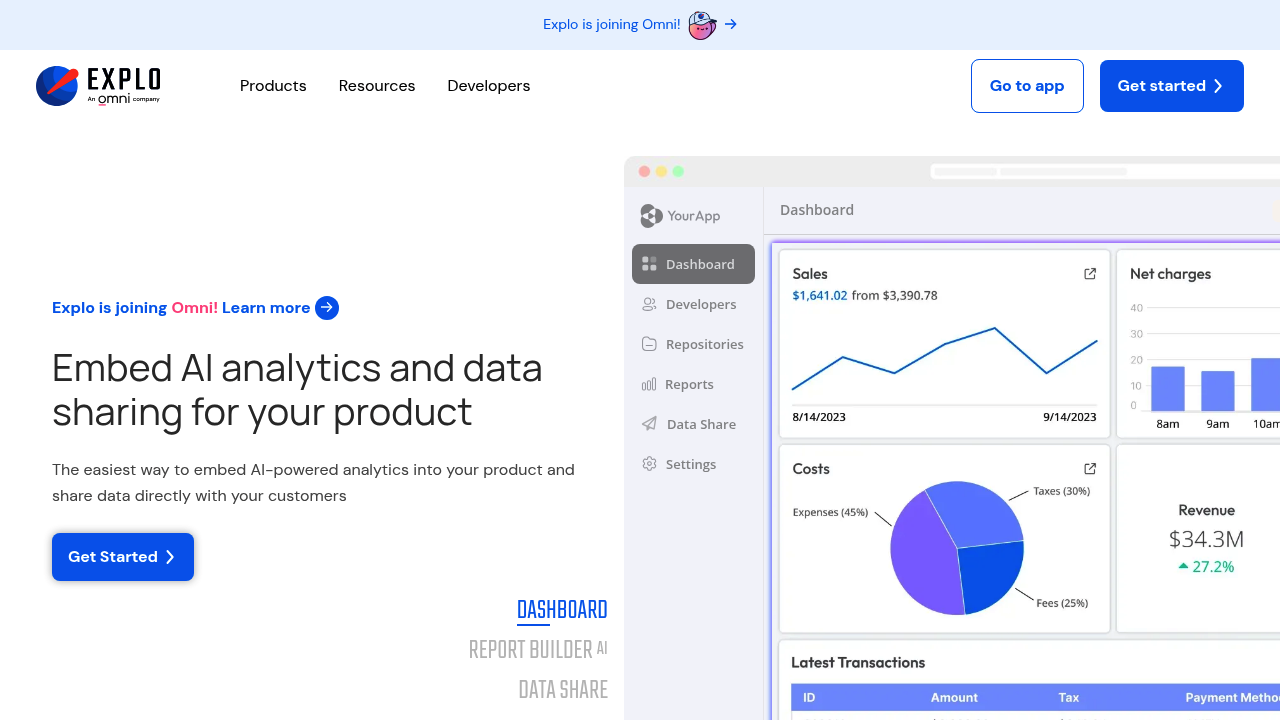
Visit website Desktop screenshot of Explo web interface

An embedded & white labelled analytics solution for product and engineering teams. Interactive dashboards, self-serve reporting, Explo AI, and enterprise-grade security all for your end users.

Reporting & Analytics
51 DR
Vote for this project
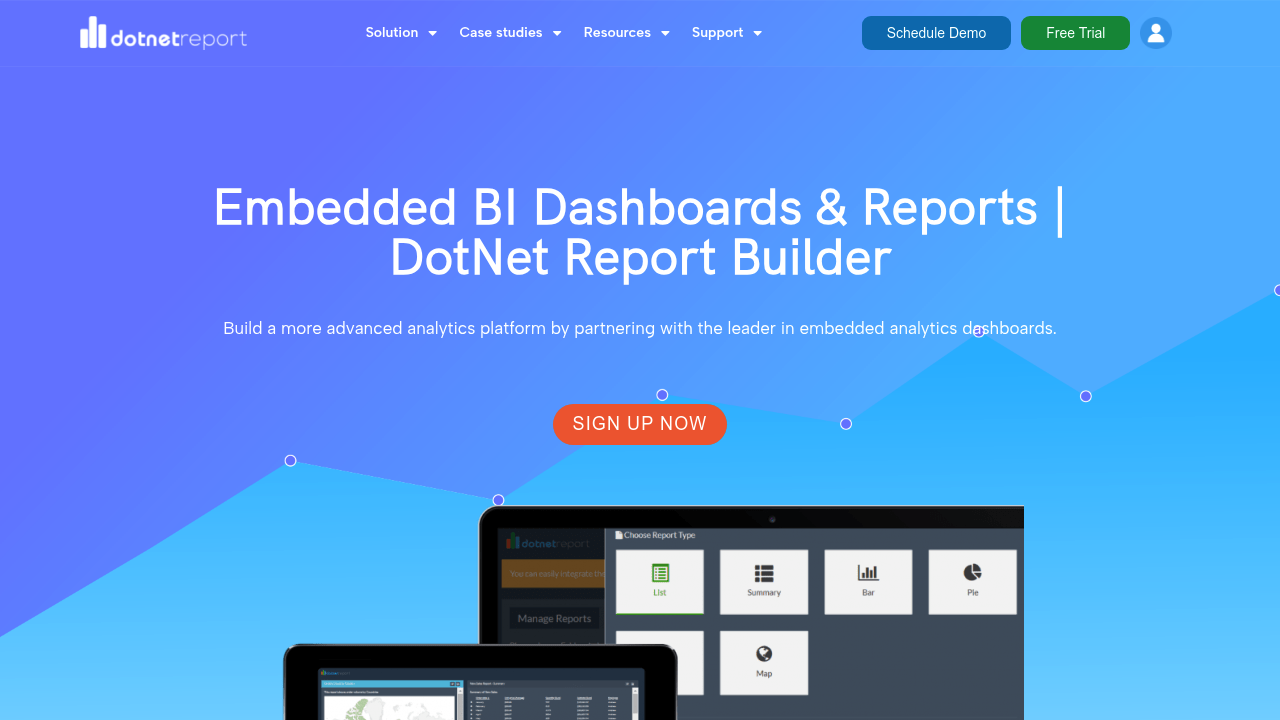
Visit website Desktop screenshot of DotNet Report web interface

DotNet Report lets you customize the look and feel of their white labeled analytics interface in line with your company branding, logos, or other signature features – either naked (without embedding) for a more minimalistic design; or fully branded as desired.

Reporting & Analytics
40 DR
Vote for this project

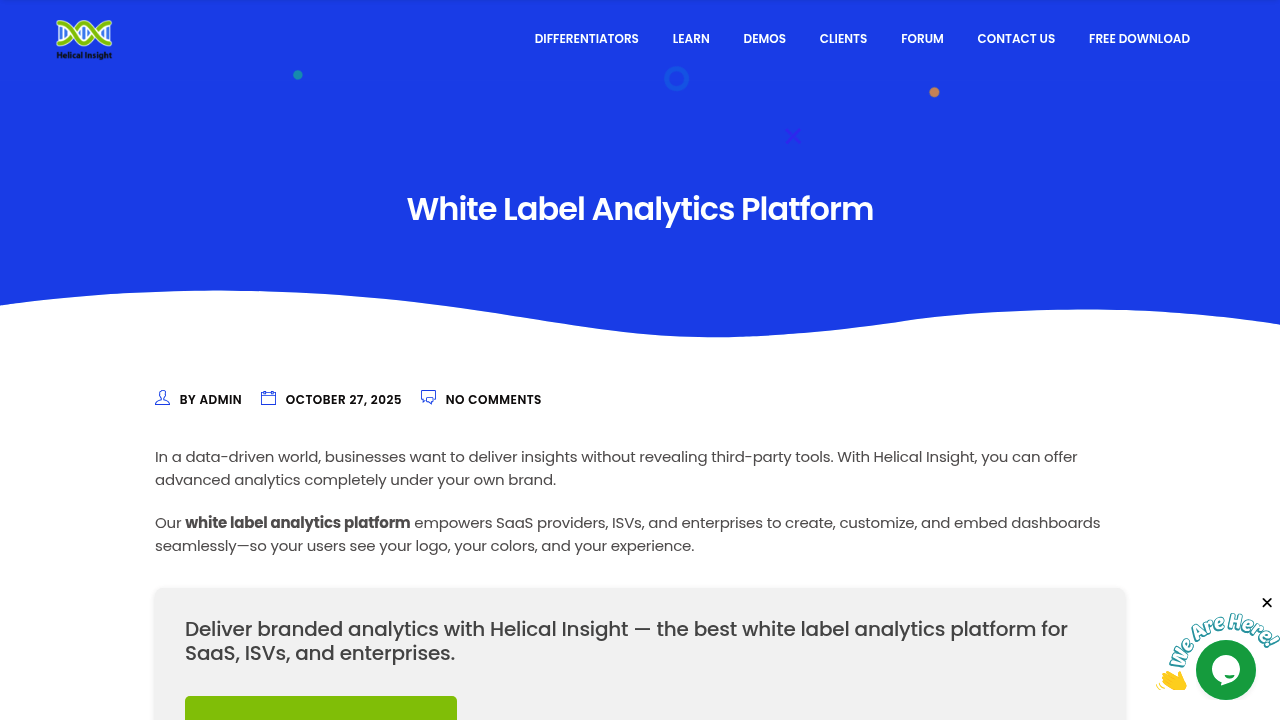
Visit website Desktop screenshot of Helical Insight web interface

Deliver branded analytics with Helical Insight — the best white label analytics platform for SaaS, ISVs, and enterprises.

Reporting & Analytics
Agency Fit Enhanced White-Label🔋 No-code Entrepreneur Fit
27 DR
Vote for this project
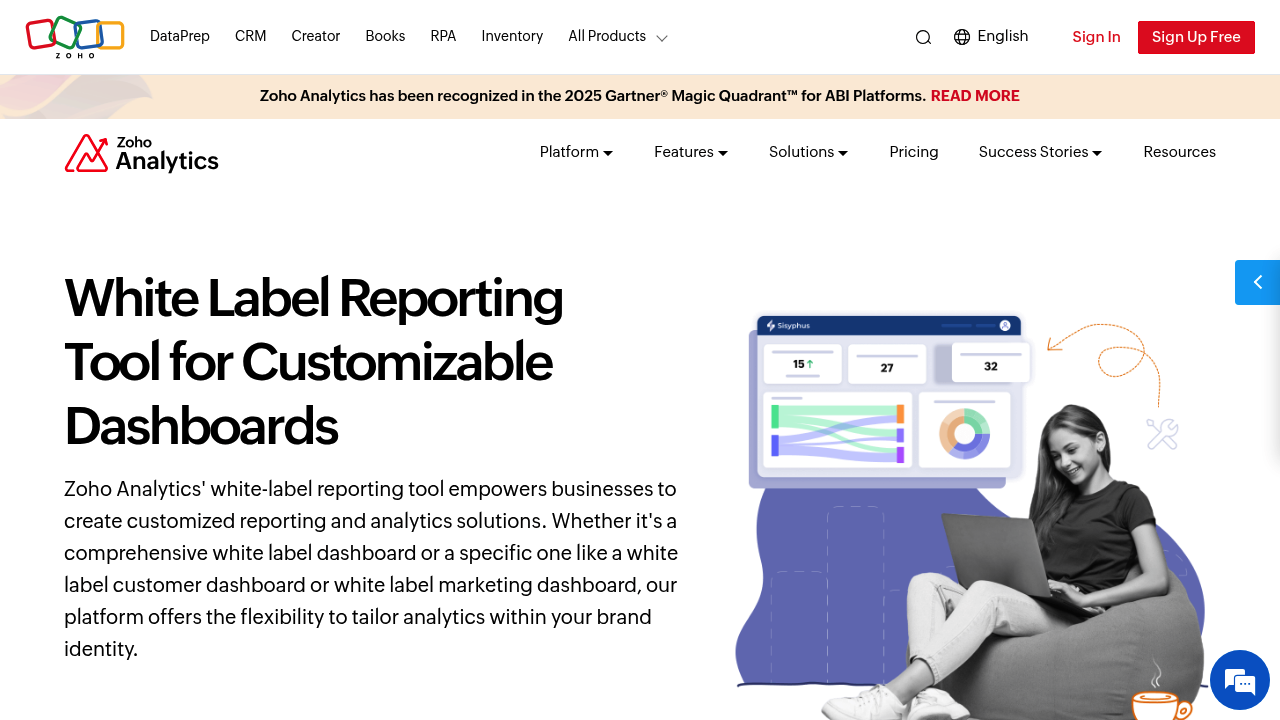
Visit website Desktop screenshot of Zoho Analytics web interface

Explore what white label reporting is and how you can create branded dashboards to provide customers with white label reports. Try Zoho Analytics for free!

Reporting & Analytics
92 DR
Vote for this project
Visit website Desktop screenshot of ClicData web interface

Enhance your applications with a feature-rich embedded analytics platform designed for real-time dashboards, reporting, and seamless integration. This data platform is for you, not for us. So make it yours by changing its look and feel, its login page, the domain and emails.

Reporting & Analytics
73 DR
Vote for this project
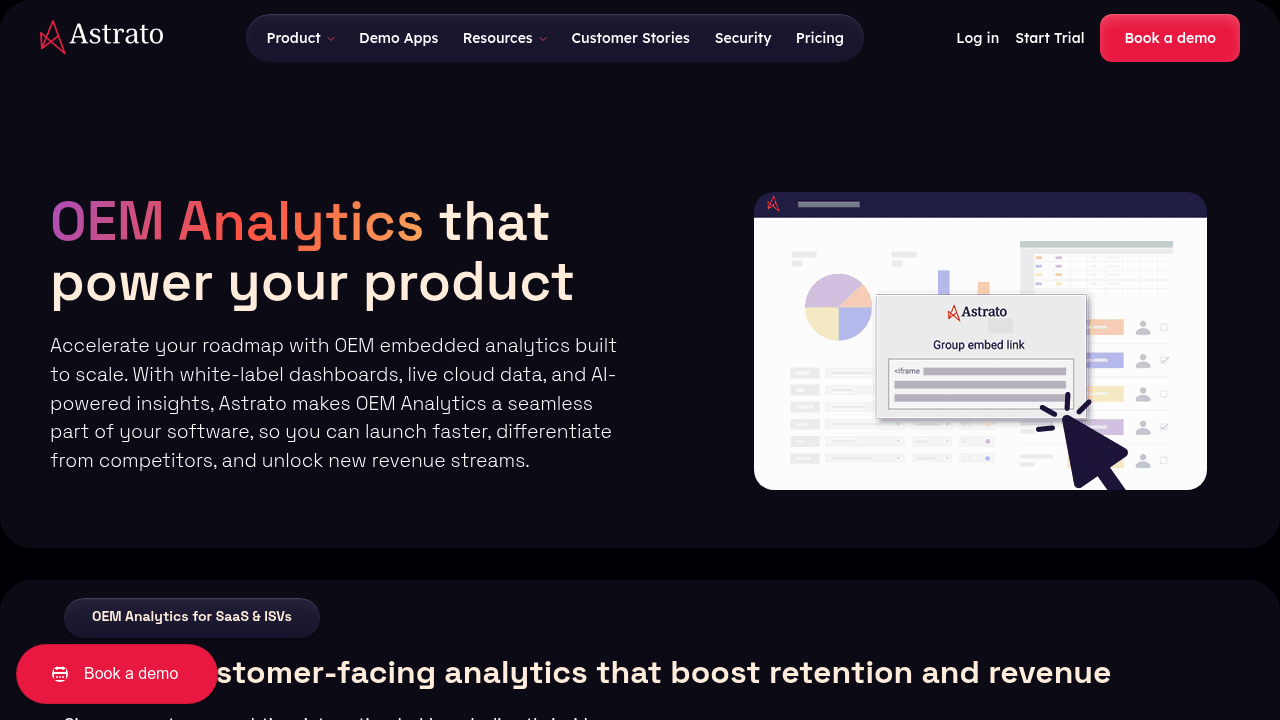
Visit website Desktop screenshot of Astrato web interface

Accelerate time-to-market with Astrato’s OEM Analytics. Deliver white-label dashboards, real-time insights, and self-service BI directly inside your software or SaaS product.

Reporting & Analytics
Agency Fit Fully White-Label⚡ No-code Entrepreneur Fit
48 DR
Vote for this project
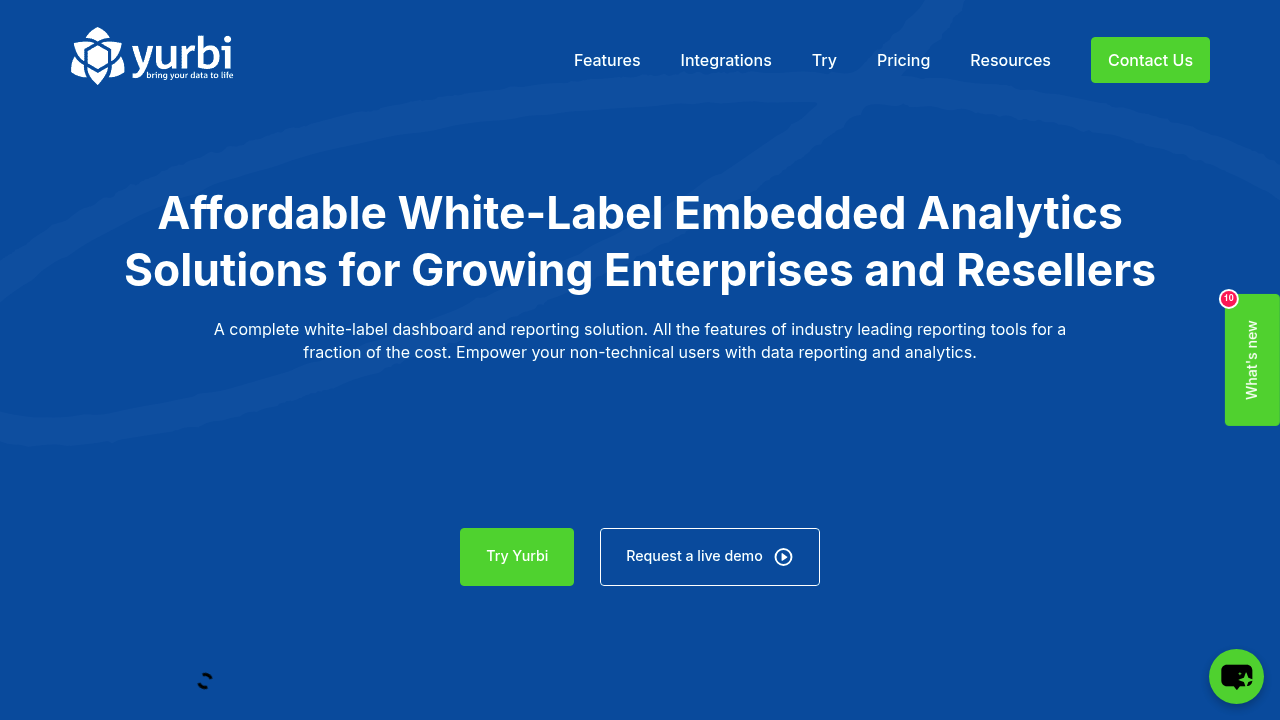
Visit website Desktop screenshot of Yurbi web interface

A complete white-label dashboard and reporting solution. All the features of industry leading reporting tools for a fraction of the cost. Empower your non-technical users with data reporting and analytics.

Reporting & Analytics
Agency Fit Enhanced White-Label🔋 No-code Entrepreneur Fit
37 DR
Vote for this project
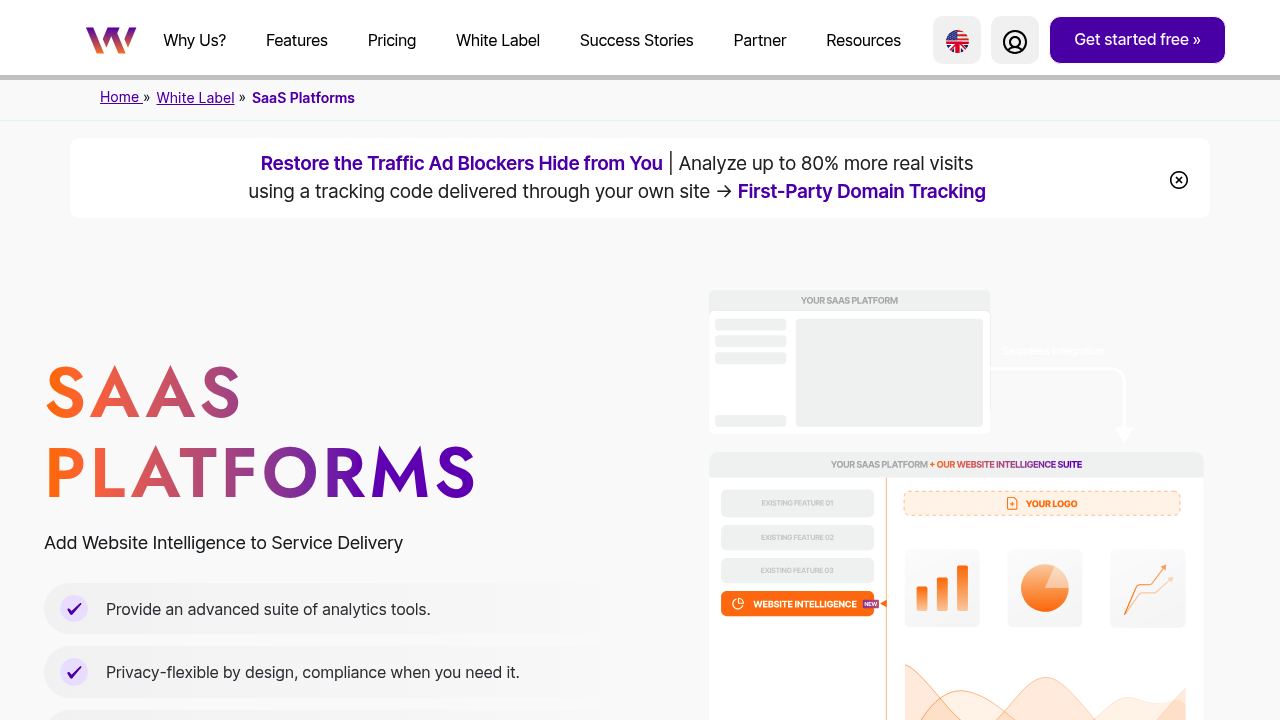
Visit website Desktop screenshot of TWIPLA web interface

Enrich your SaaS platform with a range of website intelligence features under your own branding. Open up a lucrative new revenue stream with zero effort. TWIPLA handles all onboarding, and also provides white label support, feature manuals, and reponsive live chat - all easily rebrandable to your business.

Marketing & Growth Reporting & Analytics
72 DR
Vote for this project
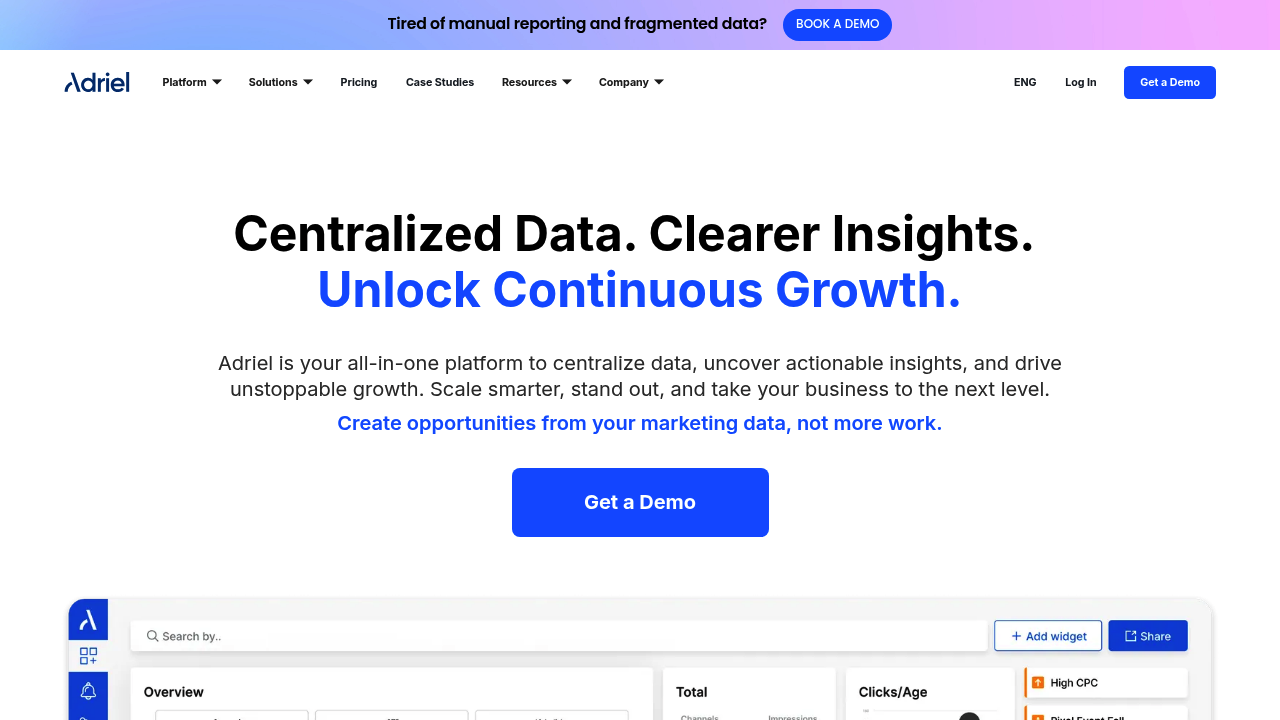
Visit website Desktop screenshot of Adriel web interface

Adriel is your all-in-one platform to centralize data, uncover actionable insights, and drive unstoppable growth. Scale smarter, stand out, and take your business to the next level.

Reporting & Analytics
58 DR
Vote for this project

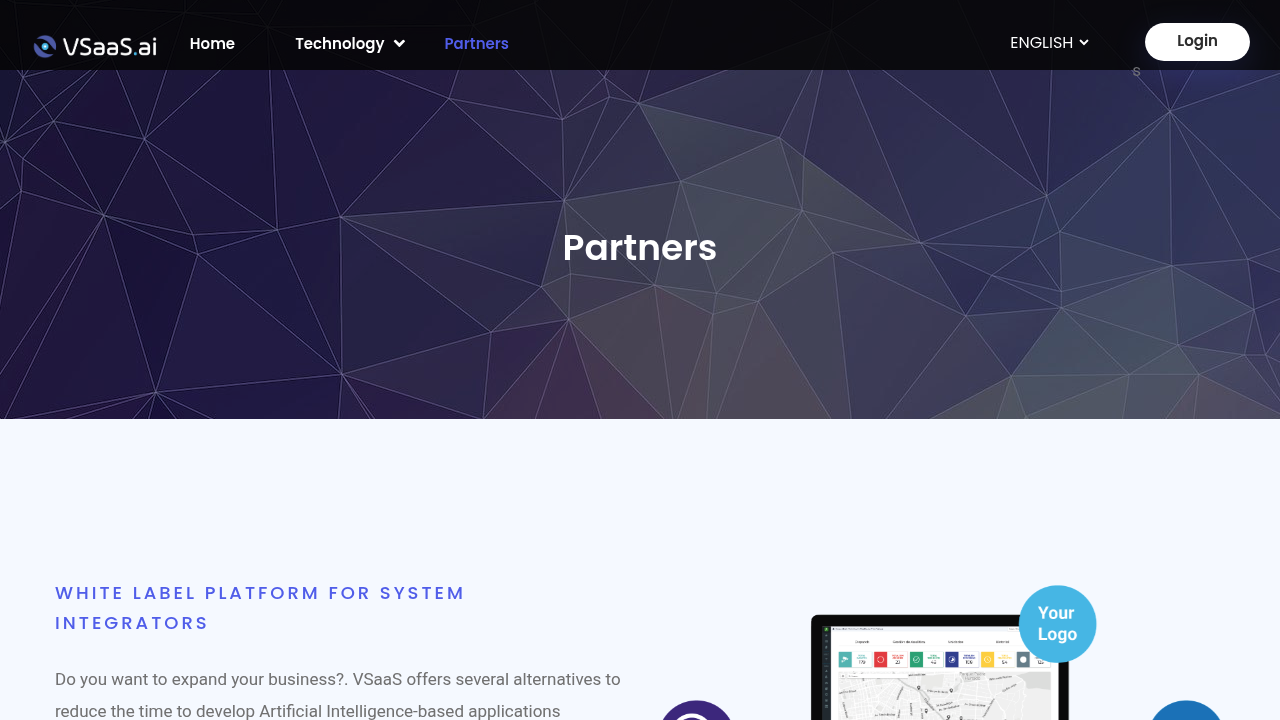
Visit website Desktop screenshot of VSaaS web interface

Do you want to expand your business? VSaaS offers several alternatives to reduce the time to develop Artificial Intelligence-based applications focused on Analytical Video surveillance. With our White Label program, offer your customers a stable, secure and proven Edge & Cloud platform, reducing development costs and getting market time from your offering almost immediately, focusing your efforts only on selling and growing your lines of business.

Reporting & Analytics Video Surveillance Solutions
Brandable White-Label 🪫 No-code Entrepreneur Fit
17 DR
Vote for this project
Visit website Desktop screenshot of Camlytics web interface

AI video analytics software solution for any IP / CCTV camera: people & vehicle counting, occupancy monitoring, motion detection, heatmaps with cloud statistics & API. Camlytics has a lot of experience in branding it's solutions for all kinds of businesses. Both Single and Service products are available for white label. We also guarantee that there will be no reference to the original Camlytics brand anywhere in the final branded product.

Reporting & Analytics Video Surveillance Solutions
Agency Fit Enhanced White-Label🔋 Reseller Fit
19 DR
Vote for this project

Click here for White Label Reporting & Analytics FAQs

White Label Reporting and Analytics FAQs

Welcome to our comprehensive guide to best white label analytics for SaaS teams, agencies, and businesses looking to integrate analytics into customer portals and products. This set of faqs explains what “white label means in practice, how to compare a BI solution, and what to expect from modern white‑label reporting and dashboards.
A white-label bi tool is a bi solution you can rebrand so analytics look like a native module in your product, not a separate vendor app. In practical terms, white labeling means your logos, colors, fonts, and user-facing UI labels replace the vendor’s, so the analytics experience feels like part of your own offer. Many vendors describe this as delivering embedded, branded experiences rather than exposing third-party analytics to end users.

Standard embedded business intelligence often embeds a dashboard but still exposes vendor URLs, UI elements, or “Powered by …” traces, so you’re still shipping third-party bi. With a white-label analytics solution, you aim for analytics without visible vendor identity, including your own domain and a consistent feel of your white-label analytics across navigation, colors, and typography. In other words, you’re moving from an embedded analytics solution to a seamless analytics experience that matches your product end-to-end.

A white label analytics platform should cover both branding and product-grade delivery, not just charts. Common analytics features include: custom theming and CSS control, custom domains, SSO, multi-tenant analytics permissions, watermark removal (full white labeling), embeddability options, and governance over data sources and refresh schedules. For many SaaS use cases, you also want embedded analytics features like row-level security, audit logs, and scalable caching so white label dashboards stay fast on real-time data and remain fully branded analytics.

Start by mapping your product’s analytics needs to a bi platform that supports multi-tenancy, strong permissions, and repeatable tenant onboarding. Prioritize a purpose-built embedded analytics platform with SDKs/APIs, SSO, and secure tenant isolation, then validate whether it supports self-service analytics (for your team or customers) without creating security risk. Many teams shortlist bi tools that are explicitly built as embedded bi, because the integration and scaling model tends to be clearer for SaaS than traditional internal BI deployments.

To choose the right white label, define your analytics offering first: who the users are, what decisions they’ll make, and what “done” looks like (usage, retention, upsell). Then choose the right white label analytics by scoring: brand control, embedding depth, security/multi-tenancy, performance, implementation effort, and cost at scale; this is how you land on the right white label analytics platform instead of the most popular logo. A practical rule: if you must deliver analytics inside your app with minimal vendor footprint, treat white-label and integration requirements as “must-have,” not “nice-to-have.”

Yes—if you need self-hosting and brand control, “affordable” usually means choosing a self-hosted BI option where white-label branding is available via a paid tier, or selecting a licensed on-prem embedded analytics product that includes rebranding features. A practical low-cost path is to keep the BI engine on-prem and embed it into your own portal (with your authentication, navigation, and custom domain), but you should still budget for infrastructure, upgrades, and admin effort.

A common pattern is: centralize ingestion from your data sources, model tenants/clients, and embed filtered dashboards into a portal so each client sees only their slice. You can integrate analytics into existing applications by using SSO plus an embed method (iframe or SDK), then wrap it in your navigation so it feels consistent with the rest of your software. Done well, you make analytics feel like a first-class product module rather than an external reporting page.

First, confirm your plan supports full white (watermark removal, custom domains, branded emails), because many tools gate these behind higher tiers or add-ons. Next, configure branding (logo, colors, typography, terminology), set a custom domain, and update report headers/footers and email templates in your reporting platform so all user touchpoints are consistent. Agency guides often emphasize that removing “Powered by …” elements in reporting tools is as much a commercial/package decision as a technical one.

Make the analytics feel native by aligning authentication (SSO), navigation, terminology, and visual style so users don’t perceive a context switch between your app and analytics. Validate performance using production-like data volume and realistic user load (for example: peak hour usage, concurrent sessions, and worst-case dashboards), then standardize interaction patterns—filters, date pickers, drill-downs, and exports—so users don’t have to relearn controls on every dashboard. Finally, define a consistent “insight to action” flow (annotations, sharing, alerts, or tasks) so analytics supports decisions rather than becoming a passive reporting page.

The benefits of white label analytics for agencies are mainly commercial and operational: stronger brand perception, reduced “go direct to the vendor” risk, and scalable client reporting. A well-packaged bi solution also lets agencies sell bi and analytics as a premium layer (dashboards, insights, benchmarking) rather than treating reporting as a cost center. Some industry guides frame this as turning reporting into a productized service with consistent delivery and margins.

Key risks include vendor lock-in, compliance responsibilities (DPAs, retention, GDPR), and underestimating implementation/maintenance work—especially if you move from traditional bi to customer-facing, multi-tenant scenarios. Another risk is spending on branding but not on decision support: dashboards exist, but no one owns insights, so adoption of bi stalls. Also be careful not to over-customize early; heavy customization can slow upgrades and make building analytics workflows harder over time.

It fails when analytics is treated as a cosmetic deliverable (a pretty dashboard) rather than an operating process with ownership, cadence, and clear decision use-cases. Common failure modes include: no single person accountable for insights, unclear KPIs tied to client goals, unreliable data inputs, and dashboards that don’t translate into actions (changes to targeting, budget, creative, or funnel steps). In those cases, clients may view reporting as “numbers for the sake of numbers,” engagement drops over time, and the program quietly becomes a low-value monthly ritual.

Often, no—if the team is comfortable with standard BI UI, there’s less need to hide vendor identity, and industry-leading bi tools already work well internally with minimal theming. It can still be worth it if you run multiple internal portals and want a unified experience, or if you plan to later expose the same analytics externally (partners/customers) and want to avoid rework. In those cases, a white-labeled bi solution can be a strategic foundation even for internal rollouts.

White-label analytics can improve internal operations by creating a consistent analytics environment across departments, so teams access the same KPIs, definitions, and reporting workflows through a single branded portal instead of scattered BI links and spreadsheets. It supports internal processes by standardizing role-based access, enabling governed self-service (so teams can answer routine questions without waiting on analysts), and making dashboards/reports repeatable across business units with shared templates and metric definitions. It also reduces future rework if you later decide to expose the same analytics to partners or customers, because the branding, permissions model, and embedding approach are already designed for controlled reuse.

Build if your needs are truly minimal and stable; otherwise, white-labeling is usually faster and safer because mature bi tools already handle security, scaling, and visualization depth. Many embedded analytics guides cite large time-to-market differences between buying and building, and a modern white-label approach can still support ai-powered analytics and predictive analytics if your product roadmap needs it. A pragmatic middle ground is to use a white-label bi engine and build a thin UX shell for the parts that must be custom.

Plan for scale and change: new data sources, new tenants, and evolving governance requirements will stress the platform over time. Verify roadmap fit for ai-powered analytics, auditability, and self-service analytics, and make sure your contract covers branding depth, support SLAs, and portability so you’re not trapped. The best white label and best white-label choice long term is the one that keeps your embedding flexible while still delivering high-quality analytics to end users.

Filters

Custom Fields

Tags

White Label Categories